
 雷科技
雷科技

























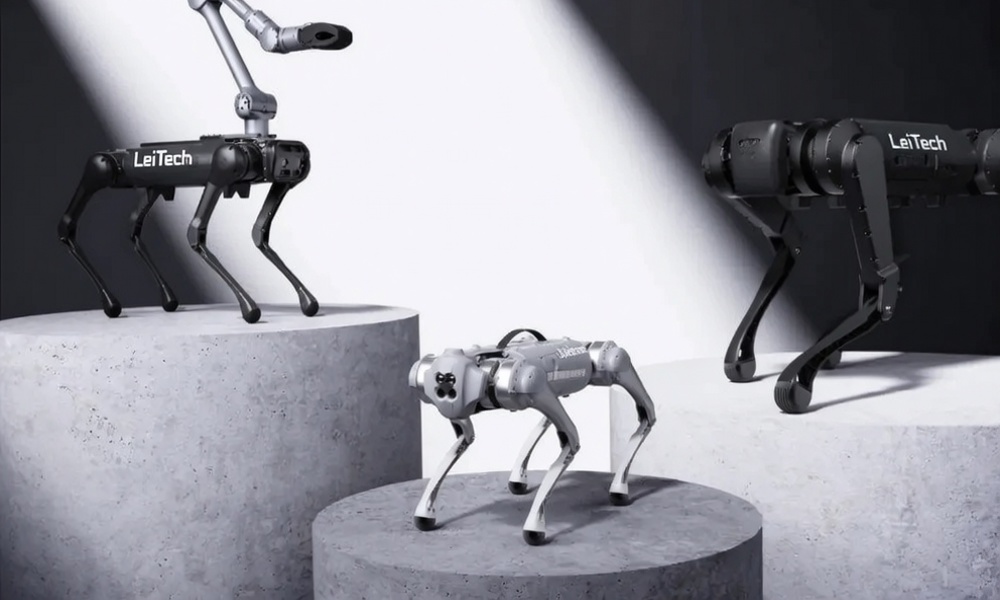

On September 2, Blue Whale News exposed a hair‑raising practice. On Xianyu, China’s second‑hand marketplace, some robot rental vendors are tampering with battery labels of Unitree Robotics robot dogs. They disguise high‑capacity batteries as aviation‑compliant units to smuggle them onto passenger aircraft.
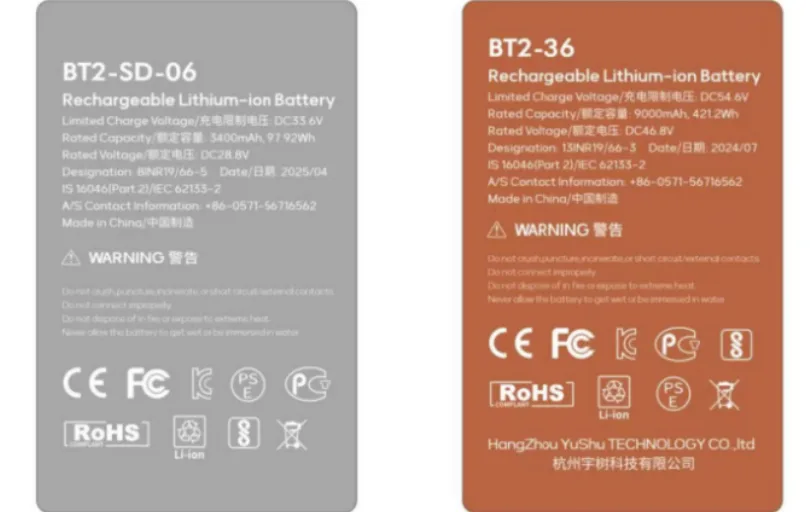
Original factory labels marked with a rated energy of 421.2 Wh are peeled off and replaced with self‑printed counterfeit grey‑colored labels, falsifying the rated energy down to 97.92 Wh.
The stated capacity is cut to less than one‑quarter of its true value, landing just below the critical 100 Wh aviation threshold.
A power lithium‑ion battery holding the energy equivalent of roughly ten ordinary power banks is being sneaked onto flights merely by means of these two fake labels.
This grey‑market operation has evolved into a well‑established business model.
Some sellers offer label‑tampering as a value‑added service: customers can pay extra to have the labels altered when renting a robot dog. Others sell standalone counterfeit label templates for dozens of yuan, letting buyers apply the fake stickers themselves.
Sellers produce near‑identical replicas directly based on Unitree’s original battery‑label templates.
Source: Weibo
The services are also offered in a convenient package. Some vendors ship out units with fake labels already attached, while others send printable files to customers so they can apply the stickers themselves.
Certain sellers even brazenly claim that everyone in the trade is doing this, insisting their method is completely safe and reliable.
Naturally, this service comes with an extra surcharge ranging from 100 to 200 yuan.
A former employee of Unitree Robotics told reporters that back in 2023, the company once affixed battery‑capacity labels showing values below the regulatory limit for select clients with special needs. As recently as June this year, a Go1‑Standard‑edition unit bearing a fake label was still on public display at one of Unitree’s exhibition showrooms.
A sales representative from Unitree Robotics stated to reporters that labels could technically be altered, though the representative did not have such labels and was unable to supply them.
To sum up: fake labels were once applied internally by the company, products carrying counterfeit labels remained on‑show in its showroom, and its sales staff acknowledged that label modification was possible.
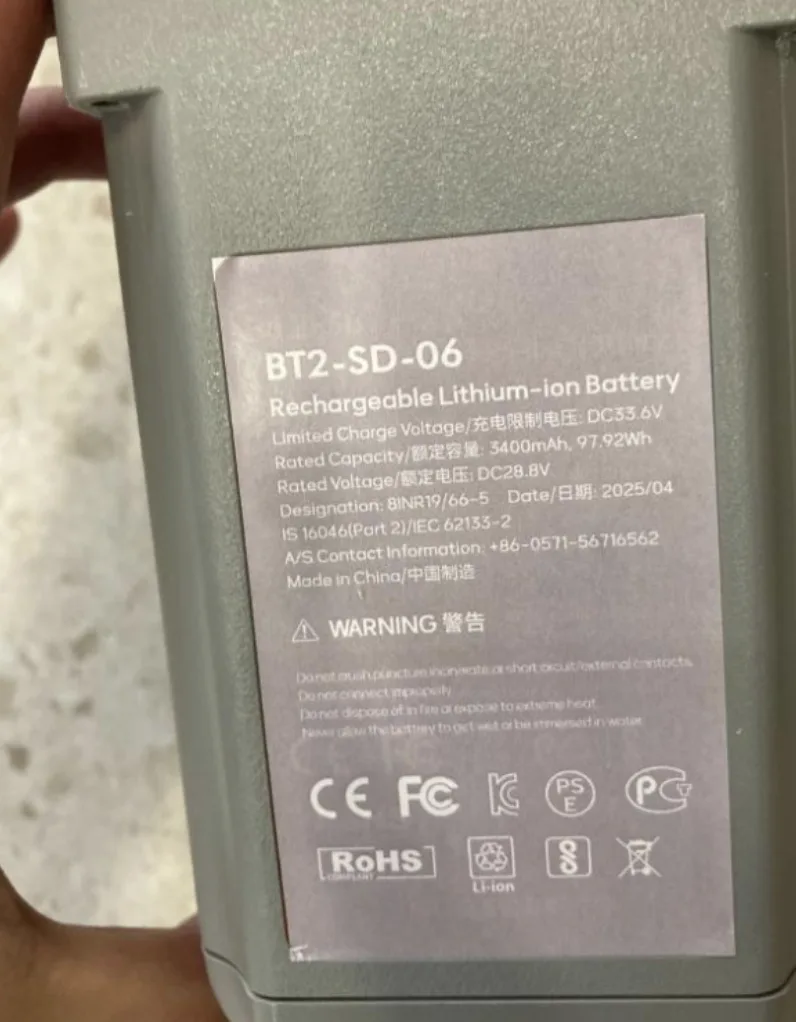
Source: Weibo
Given all these overlapping pieces of evidence, few would believe Unitree Robotics was completely unaware of what was going on.
Some may ask: why take such enormous risks to alter battery labels merely to cut down shipping‑transit time?
The simple answer is speed.
Industry insiders confirm that the primary use case lies in commercial performances and events. Rental firms and robot owners need to ship equipment rapidly across the country and even overseas for trade shows, corporate galas, real‑estate launch ceremonies, school science festivals and other occasions.
If a client has a commercial show in Xinjiang scheduled for the next day, ground freight for the batteries would take four to five days. Getting them on a flight, by contrast, delivers them the very same day.
A single cancelled or delayed performance can trigger combined losses for venue rental, labour and equipment running into tens‑of‑thousands or even hundreds‑of‑thousands of yuan.
From this perspective, potential losses vastly outweigh the 200‑yuan surcharge for fake label modification.
Faced with a choice between speed and aviation safety, operators are picking speed.
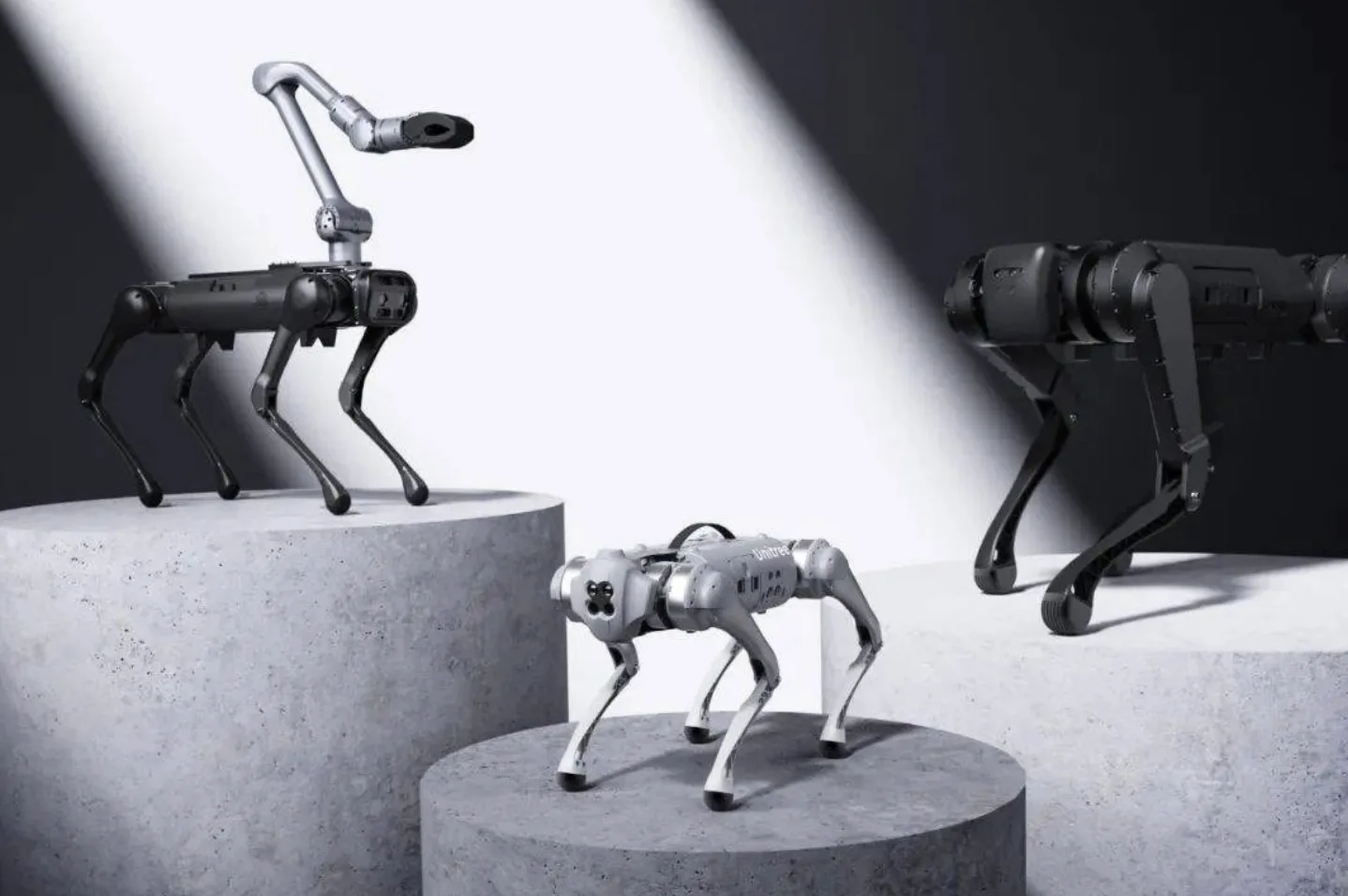
What is more, official pricing puts the battery for the standard‑edition Unitree GO2 (8000 mAh) at roughly 2,500 yuan, while its long‑range variant (15000 mAh) costs around 4,000 yuan.
Listings on Xianyu undercut official prices by more than 1,000 yuan. Even after adding the label‑altering service fee, the total cost remains highly compelling for buyers.

Source: Baidu
For rental vendors, saving more than 1,000 yuan while being able to bring the batteries aboard a plane makes the deal a no‑brainer by any calculation.
Profits are made, yet at the potential cost of every passenger’s life on‑board the aircraft.
An insider from a lithium‑battery manufacturer warned that if a 421.2 Wh power lithium‑ion battery suffers thermal runaway in the passenger cabin due to compression or short‑circuit, it will burn extremely fast and prove very hard to extinguish. Within an enclosed cabin, this poses a direct threat to the lives of all passengers on the flight.
Thermal runaway can strike with zero advance warning. It may be triggered by battery damage, overheating, water exposure, over‑charging, improper packaging and other factors.
What does 421 Wh actually mean?
It equals the total energy of roughly ten standard power banks.
Adding to the irony, CAAC (Civil Aviation Administration of China) regulations stipulate that lithium‑ion batteries of no more than 100 Wh may be carried as carry‑on luggage. Batteries exceeding 100 Wh but not above 160 Wh can be transported only with airline approval. Any battery over 160 Wh is strictly forbidden for both carry‑on and checked baggage.
Unitree Robotics has never sold any battery rated at 4500 mAh and 99.9 Wh.
Those batteries fitted with counterfeit labels are ticking time bombs that could detonate at any moment.
A fake label may fool security screeners and airline staff, but it cannot defy the laws of physics.
Should an incident occur, airlines would face heavy losses, while the lives of every person aboard the aircraft would be put at risk.
After the story gained public traction, Unitree’s customer service issued a response. It stated that robot‑dog batteries are not approved for air travel, that the company offers no label‑altering service, and that specialists are handling the matter.
Source: Baidu
However, this response has clearly failed to convince netizens.
Many online users argued that this is not merely a grey‑market industrial chain, but an outright black‑market operation. Who would bear responsibility if an accident occurs after tampered‑label batteries are smuggled onto flights?
Some netizens put it more bluntly: Did the official entity itself start skirting regulations first, only to distance itself once downstream illicit businesses grew? Had the company not set that precedent internally back then, downstream vendors might never have dared to act so brazenly.
From the perspective of Xiaolei Chat (ID: xiaoleibbb), the safety red‑line must never be crossed — this is an inviolable bottom line. No matter how urgent travel demands may be, tampering with labels to sneak batteries aboard aircraft is to gamble with aviation safety. Such conduct should never be encouraged and calls for strict regulatory crackdowns.
This incident also lays bare a more practical problem.
While the market is booming, supporting regulations covering robot‑dog transportation, battery carriage and airport security inspection protocols have yet to be fully established.
As a leading enterprise in the sector, Unitree Robotics ought to set a good example in abiding by rules and provide the public with a full explanation over the fake‑label scandal.
Lastly, do you believe Unitree Robotics bears responsibility for this affair? If you were a frequent air‑travelling business passenger and learned that a high‑capacity tampered‑label battery might be nearby on your flight, how would you feel? Feel free to share your thoughts in the comment section.
From September 4–8, IFA 2026—the world’s largest consumer electronics and home appliance exhibition—will be held in Berlin.
As the “premier new media outlet for IFA coverage,” globally recognized for its AI-powered reporting excellence, LeiTech is deploying its largest and highest-caliber on-site reporting team ever to Berlin. Leveraging a “2+N” model—two live hosts plus multiple on-site editors and remote editorial staff—LeiTech will deliver real-time, immersive, and first-hand coverage of IFA 2026. Key focus areas include AI agents integrated with home appliances and hardware; robotics technologies converging with domestic living environments; emerging digital lifestyle trends across human mobility, automotive, and home ecosystems; and Chinese brands’ global stage presence.
LeiTech’s IFA 2026 reporting team members are already en route—stay tuned for our frontline dispatches!