
 雷科技
雷科技



























459 days ago, Xiaomi unveiled the Xuan‑Jie O1, marking its return to the flagship‑phone SoC arena. 459 days later, not only has the Xuan‑Jie O3 arrived, it comes with more “siblings”.
On the afternoon of August 24, Xiaomi held the Xuan‑Jie Chip Technical Briefing. Zhu Dan, head of the Xuan‑Jie chip project, announced three in‑house‑developed chips in one go: the Xuan‑Jie O3 for flagship smartphones, the Xuan‑Jie O100, an AI‑acceleration chip built for on‑device large‑language models, and the Xuan‑Jie D100, a high‑computing‑power autonomous‑driving chip designed for vehicles.
The Xuan‑Jie O3 will debut on Xiaomi’s new‑generation large‑foldable‑screen device, the 18 Fold, and hit the market officially in September. The other two chips have completed research and development and are scheduled for commercial launch next year.
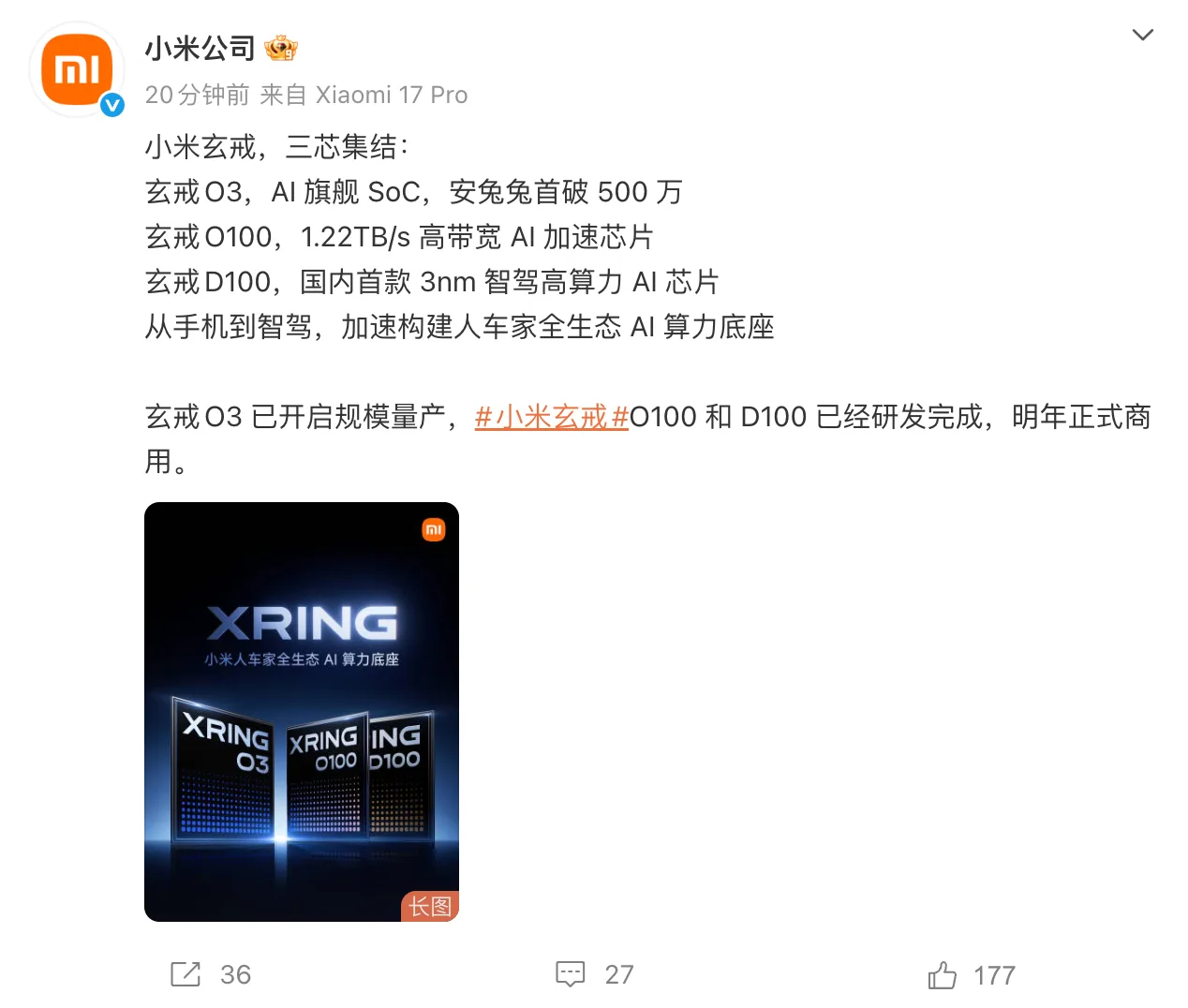
Image Source: Xiaomi
As previously disclosed by Lu Weibing, the cumulative shipment volume of the Xuan‑Jie O1 across three terminal products has exceeded one‑million units, and the Xuan‑Jie chip line will maintain an annual iteration cycle. Lei Jun has also stated that Xiaomi restarted its large‑scale chip‑development initiative in 2021, with plans for at least ten years of investment and a minimum budget of 50‑billion‑yuan. As of April 2025, cumulative research‑and‑development spending on the Xuan‑Jie project had surpassed 13.5‑billion‑yuan.
The arrival of the O3, O100 and D100 undoubtedly demonstrates Xiaomi’s unwavering commitment to self‑developed chips. On the other hand, a single O3 chip will clearly not resolve all related challenges, calling for a more flexible development roadmap and an expanded Xuan‑Jie product portfolio. This is especially true as “Xiaomi Xuan‑Jie” is poised to become the AI‑computing‑power foundation for Xiaomi’s full “Human‑Car‑Home” ecosystem.
Even so, the Xuan‑Jie O3 remains the most important chip announced today for both consumers and Xiaomi, and it serves as the primary focus of this article from Leitech (ID: leitech).
Upgrades for the Xuan‑Jie O3: More than simply bigger or faster
According to the released specifications, the Xuan‑Jie O3 is still a highly ambitious flagship‑grade SoC built on the 3‑nanometre manufacturing process. Its transistor count has risen from 19‑billion on the O1 to 24‑billion, and the die area reaches approximately 133 mm².
Rather than rushing to shrink the chip size and cut costs, Xiaomi has opted to reserve ample headroom for performance.
The CPU changes are particularly noticeable. The Xuan‑Jie O1 adopted a 10‑core four‑cluster layout featuring the Cortex‑X925 super‑core, A725 performance cores and A520 efficiency cores. For the O3, Xiaomi has completely redesigned its CPU configuration, adopting Arm’s next‑generation C1‑series IP. It delivers an all‑big‑core 10‑core architecture consisting of six super‑cores plus four large cores, with a peak clock speed of 4.35 GHz.
Figures provided by Xiaomi show that the Xuan‑Jie O3 delivers a 60% uplift in CPU performance compared with the O1, alongside a 25% reduction in power consumption under light‑to‑moderate workloads.
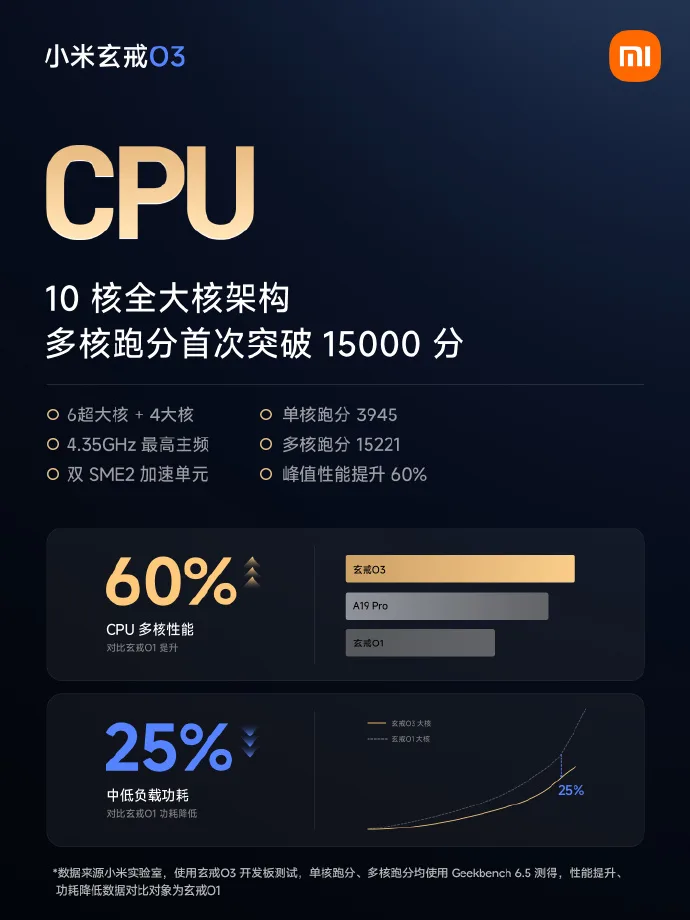
Image Source: Xiaomi
The conventional design approach for smartphone SoCs in the past was to assign background tasks and light workloads to efficiency cores, while progressively offloading heavier jobs to big cores and prime‑performance cores. However, starting with Arm C1 and recent generations of Dimensity chips, mobile processors are shifting toward higher‑efficiency big cores to cover a broader performance range.
Xiaomi has clearly made its own choice. Code previously unearthed from Mi Code foreshadowed that the Xuan‑Jie O3, codenamed "lhasa", would switch from the O1’s four‑cluster layout to a three‑cluster configuration, with across‑the‑board boosts to core frequencies. Looking back, those snippets had already outlined the blueprint for the O3 well in advance.
The O3 also features a substantial GPU upgrade. It debuts the 16‑core G2‑Ultra NX graphics processor, delivering an 85‑percent performance gain alongside a 64‑percent drop in power consumption compared to the Xuan‑Jie O1.
That said, peak benchmark figures from the launch event should be treated only as a reference. Xiaomi reported an AnTuTu V11 score of 5,228,014 points, with the test explicitly conducted inside a low‑temperature laboratory. For a mobile‑phone SoC, its real‑world sustained performance hinges on how much speed it can retain under normal temperatures, standard power limits and prolonged workloads once integrated into a handset.
Real‑world verification of these metrics will have to wait until the commercial release of the Xiaomi 18 Fold and Xiaomi Pad 9 Pro Max.
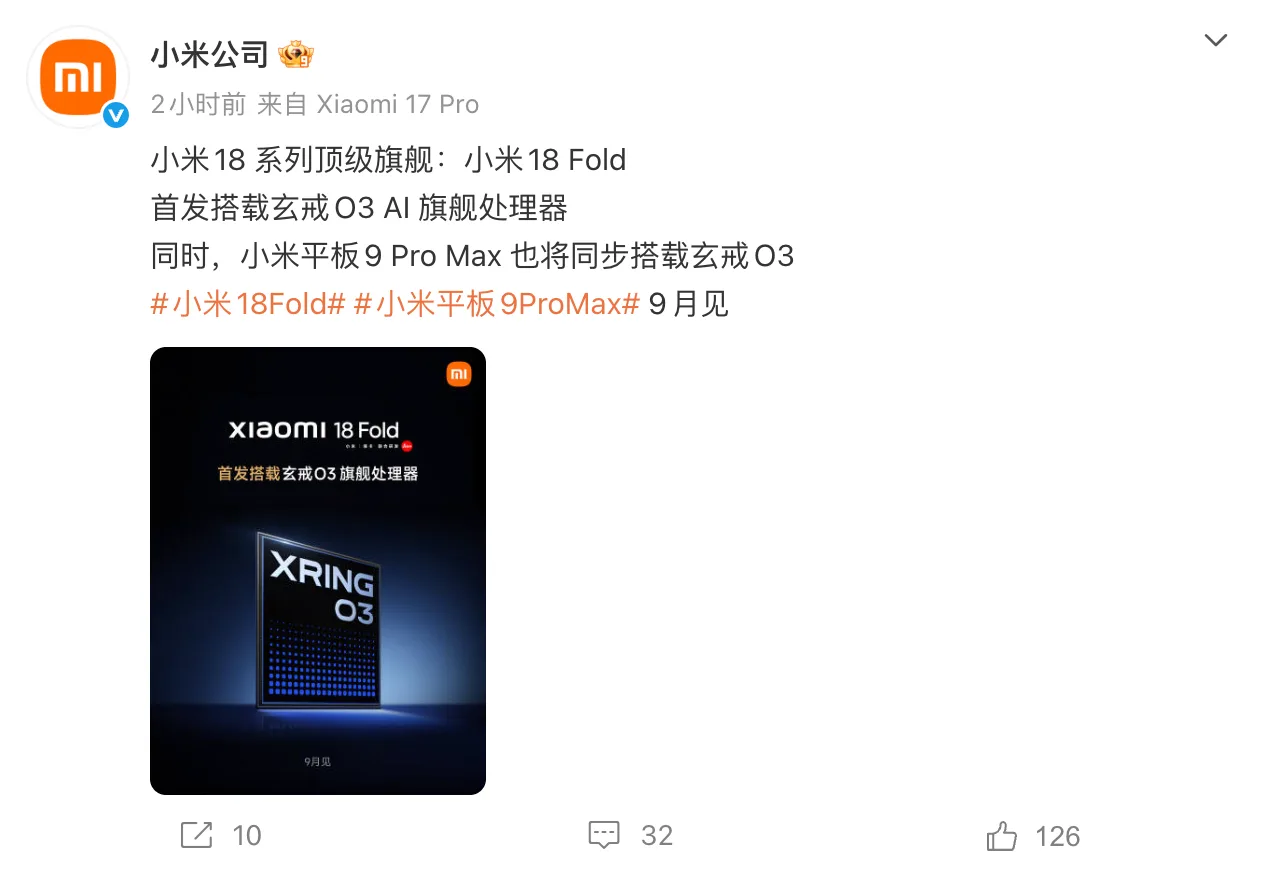
Image Source: Xiaomi
The Xuan‑Jie O3 features another upgrade that is easily overshadowed by its CPU benchmark scores‑‑memory.
As the industry’s first‑ever SoC with LPDDR6 support, the Xuan‑Jie O3 achieves a data rate of 10667 Mbps. It adopts a 4×24‑bit memory‑width configuration delivering a total of 96 bits, with a memory bandwidth hitting 113.8 GB/s, marking a 48% improvement over the Xuan‑Jie O1.
For today’s flagship SoCs, the CPU, GPU and image‑processing ISP all demand constant data flow, while large‑language‑model workloads are notoriously bandwidth‑hungry. Adding more computing cores to a chip will result in processing power sitting idle while waiting for data, if memory and on‑chip interconnection systems fail to keep pace.
To tackle this problem, Xiaomi has redesigned a unified fused bus architecture for the O3. According to Xiaomi, this protocol opens up internal data pathways across the chip and cuts overhead generated by protocol conversion by up to 75%.
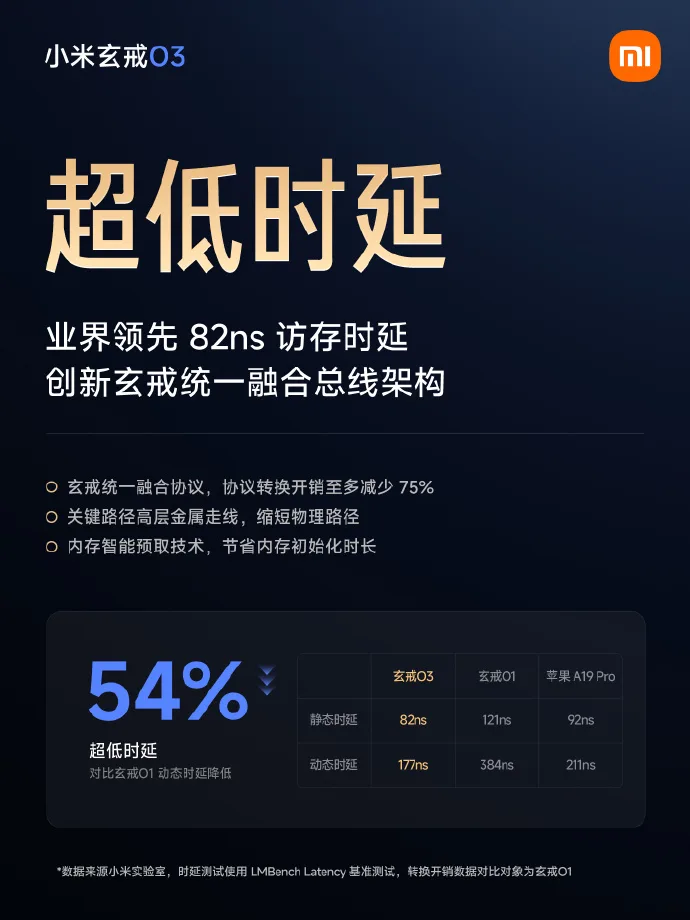
Image Source: Xiaomi
While computing‑focused IP blocks such as the CPU and GPU can be sourced from Arm, chipmakers must independently handle NoC, cache, QoS, scheduling and bus design to interconnect dozens of distinct modules and enable efficient data exchange among the CPU, GPU, NPU, ISP and memory controllers within constrained power‑consumption and die‑area limits.
Having reached the second‑generation Xuan‑Jie chip, Xiaomi has begun devoting far‑greater resources to this area. This upgrade also serves as a microcosm of how the leap from the O1 to the O3 goes beyond conventional performance gains.
The O3 carries a brand‑new title: AI Flagship SoC
At this technical briefing, Xiaomi officially defined the Xuan‑Jie O3 as an “AI flagship SoC”, laying out three straightforward evolutionary goals for the chip:
High energy efficiency, high bandwidth and high computing power.
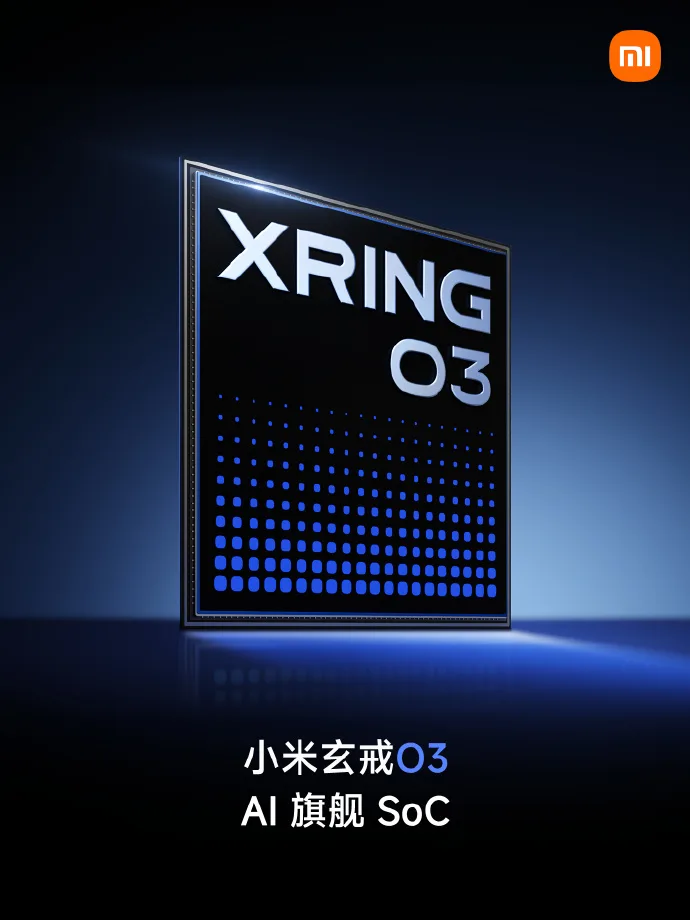
Image Source: Xiaomi
Digging deeper, the Xuan‑Jie O3 is ultimately built to serve as the AI‑computing foundation for Xiaomi’s full Human‑Car‑Home ecosystem of terminals.
When the O1 was launched, public discussion centred mostly on its 3‑nanometre process, CPU and GPU, as well as whether Xiaomi could deliver another competitive flagship‑grade mobile processor. With the O3, Xiaomi has begun placing the Xuan‑Jie chip family within a far broader technological blueprint.
Xiaomi has been outlining this strategy for more than a year.
Back in March 2025, Lu Weibing explicitly named AI, operating systems and self‑developed chips as Xiaomi’s three long‑term core‑technology pillars. At that time, Xiaomi planned to allocate roughly one‑quarter of its total R&D budget — between 7 billion and 8 billion yuan — to AI‑related initiatives covering AI infrastructure, large‑language models, multimodal models, upgraded Xiao‑AI, smart‑cabin systems and autonomous‑driving technology.
In January this year, Lei Jun set out an even more concrete objective:
By 2026, Xiaomi expects to achieve the grand convergence of its in‑house‑developed chip, custom‑built operating system and proprietary large‑scale AI model on a single terminal device.
Today, substantial progress has been made across all three development streams. The newly unveiled O3 represents its self‑developed chip; HyperOS 4 marks the latest iteration of its operating system; while the MiMo series covers its large‑model AI portfolio.
During Xiaomi’s Q2 earnings conference call a few days ago, Lu Weibing elaborated further on this strategy. He broke down Xiaomi’s current AI layout into multiple layers, with the foundational MiMo base large‑model at the lowest tier, extending its capabilities across smartphones, smart‑home hardware, electric vehicles and robotics.
For the smartphone segment, he clearly stated that Xiaomi will comprehensively restock traditional Android with AI capabilities, with the long‑term goal of evolving toward an “AIOS”. HyperOS 4 already represents a key milestone in this transition, granting task‑execution capabilities through built‑in intelligent agents.
Xiaomi CFO Stephen Lin disclosed that MiMo‑V2.5 once ranked first globally in both weekly and monthly token‑call volumes during July this year. Xiaomi continues training new AI models and plans to bring MiMo support onto personal‑computing devices. At this stage, Xiaomi is not in a rush to generate revenue from its AI business. Management’s stated direction remains sustained investment to enable artificial intelligence to reshape the entire Human‑Car‑Home ecosystem.
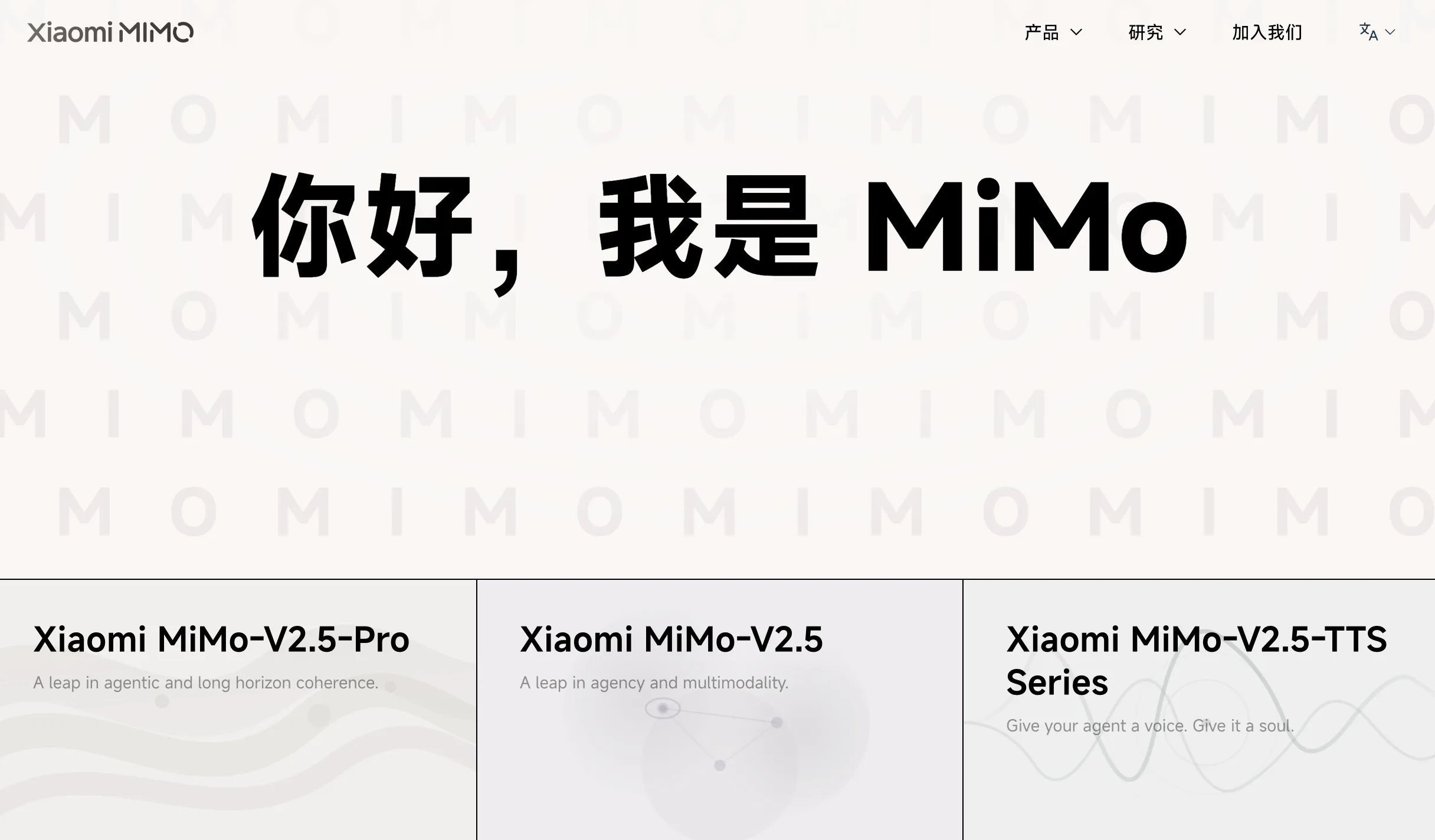
Image Source: Xiaomi
Looking back at the Xuan‑Jie O3, we can understand why Xiaomi is now placing special emphasis on "high bandwidth" and "AI‑computing‑power foundation". Once large‑language models run locally on end‑user devices, the demands placed on smartphone chips go far beyond the TOPS rating of the NPU.
Model operation involves memory bandwidth, cache, operator support, quantization precision and power scheduling. Long‑running Agent tasks, meanwhile, raise issues over system permissions, background mechanisms and cross‑application invocation. If the chip, operating system and AI model are developed by separate companies, every layer must be adapted within boundaries set by third‑party vendors.
By keeping Xuan‑Jie chips, HyperOS and MiMo fully in‑house, Xiaomi gains the opportunity to carry out genuine independent design:
The NPU can be optimised specifically for whatever operators MiMo requires;
The memory architecture can be adjusted when on‑device models demand higher bandwidth;
Long‑term Agent operation can be supported by tweaks ranging from low‑power chip scheduling all the way up to OS background frameworks.
This is the same integrated strategy Apple has proven highly effective over more than a decade: housing chips, operating systems, software and hardware under one unified R&D system allows product teams to resolve issues starting right from the hardware foundation.
Xiaomi’s situation is naturally somewhat different. Its ecosystem spans smartphones, tablets, smartwatches, home appliances, electric vehicles, plus robots now under development. A single Xuan‑Jie O3 clearly cannot cover every scenario, hence the launch of the additional O100 and D100 chips.
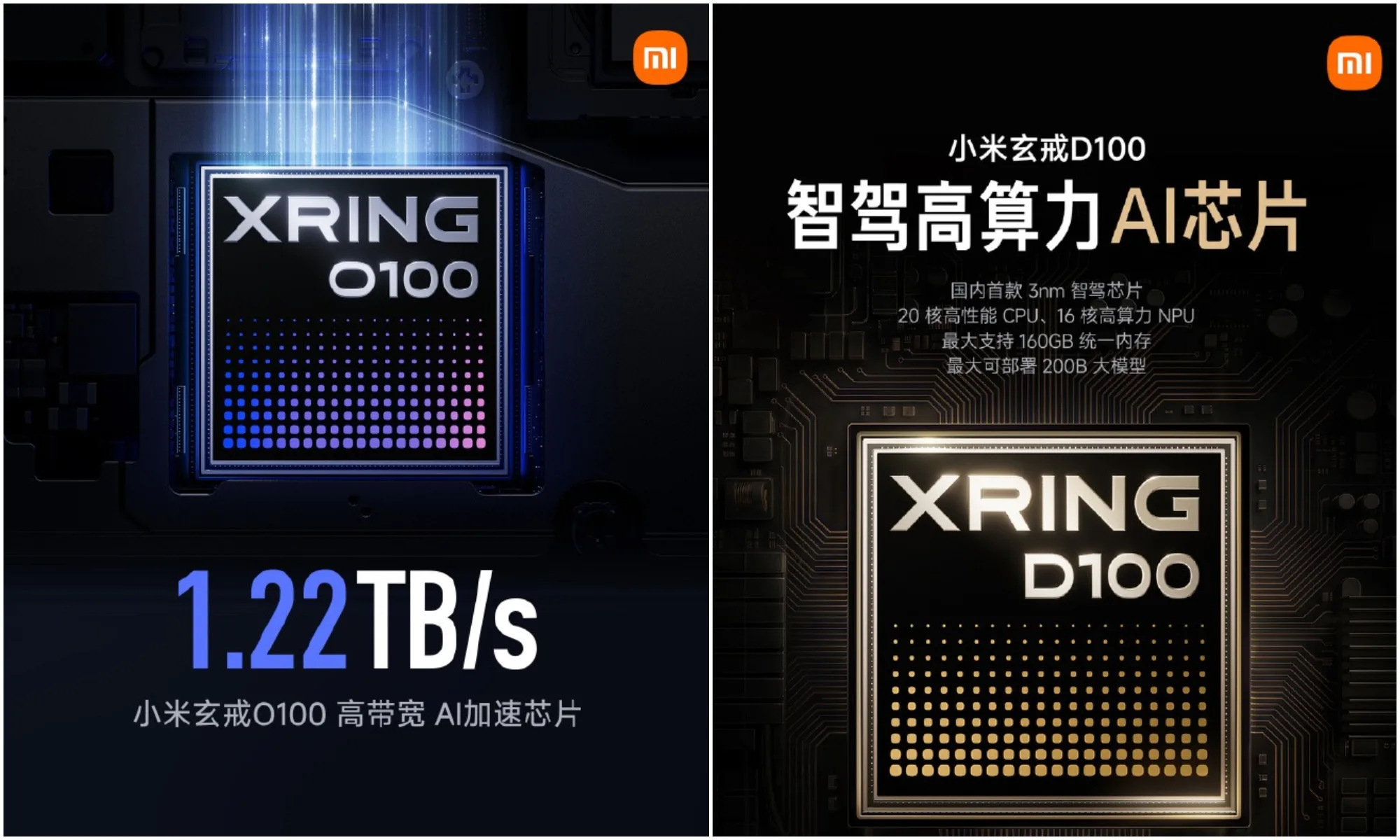
Image Source: Xiaomi
The Xuan‑Jie O100 is Xiaomi’s first high‑bandwidth AI‑acceleration chip purpose‑built for on‑device large‑language models. Using 6‑nanometre wafer‑level vertical stacking and Hybrid Bonding technology, it brings computing and storage components into closer proximity, delivering a memory bandwidth of 1.22 TB/s — roughly 16 times that of conventional flagship smartphones — with a peak on‑device large‑model inference speed of 330 TPS.
The Xuan‑Jie D100, meanwhile, is China’s first 3‑nanometre intelligent‑driving chip. Equipped with a 20‑core high‑performance CPU and a 16‑core high‑computation‑power NPU, it supports up to 160 GB of memory and enables local deployment of large‑language models with as many as 200 billion parameters.
Though these three chips target distinct workloads, they converge on a shared objective: Xiaomi aims to bring ever-increasing shares of AI compute capability across its “Human-Vehicle-Home” ecosystem fully in-house.
Xiaomi has even built an AI Cube engineering prototype housing the O3, O100 and D100 chips simultaneously, designed for the local deployment of 120‑billion‑parameter and 3‑billion‑parameter large‑language models. There are no immediate plans for commercial release. Instead, the device functions as a test‑bed for Xiaomi to verify collaborative operation across its three computing platforms.
Closing Thoughts
When the Xuan‑Jie O1 was unveiled, public attention focused on one key milestone: Xiaomi had built a new flagship‑grade SoC.
One year later, shipments of the Xuan‑Jie O1 have surpassed one‑million units across the Xiaomi 15S Pro and two devices in the Xiaomi Pad 7 lineup. While this figure is modest for Apple, Qualcomm or MediaTek, it marks a hugely significant achievement for Xiaomi as it re‑enters the flagship‑processor market.
Now, as the new‑generation self‑developed Xuan‑Jie chips‑‑O3, O100 and D100‑‑prepare to converge with HyperOS and the MiMo large‑language model, Xiaomi faces an entirely new set of challenges centred on its over‑arching “Human‑Car‑Home full‑scenario ecosystem” vision.
A definitive verdict cannot be reached today. We will only be able to judge the true quality of Xiaomi’s long‑term technology strategy once Xuan‑Jie chips have been rolled‑out across a broad range of ecosystem‑wide devices. Even so, Xiaomi has already delivered plenty of surprises, and there is good reason to hold higher expectations for the brand. This echoes the famous slogan set by Lei Jun for Xiaomi:
Always believe that something wonderful is about to happen.