
 雷科技
雷科技


















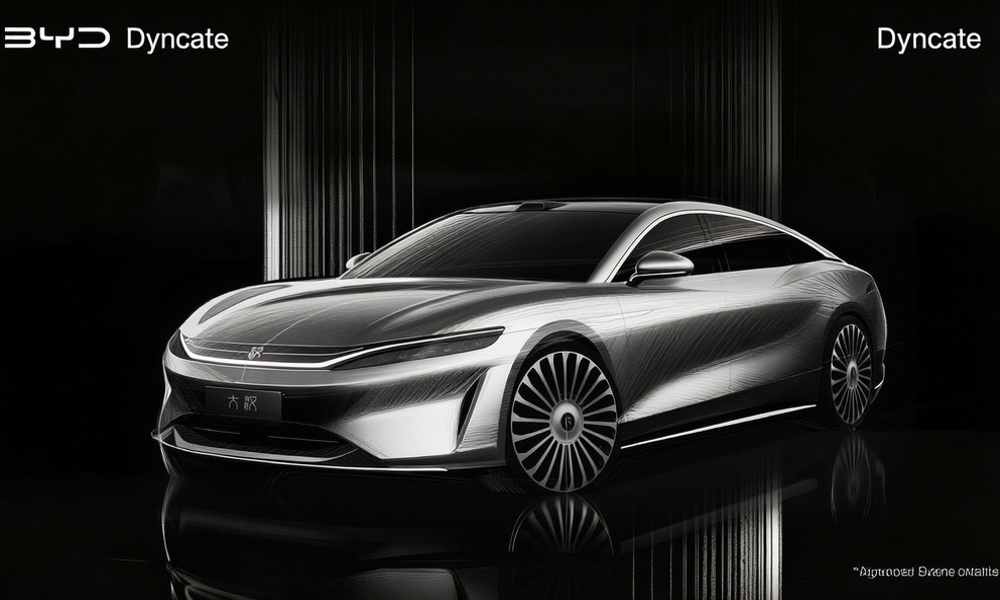

BYD’s flagship sedan Han is on its way.
On the evening of July 23, BYD officially announced its 9-series flagship sedan Han, which is set to make its debut at the Chengdu Auto Show kicking off on August 21 this year.
In the official announcement images, BYD positions the Han as "an easy-to-drive and practical flagship sedan".

(Image source: BYD)
What does the Han mean for BYD? Can BYD’s new Han and Tang flagship models help the brand recapture its glorious era of the Han-Tang lineup?
Over 5.2 Meters in Length with 1,008 Kilometers of All-Electric Range; Full-Fledged Flagship Capabilities
BYD released several key details while officially announcing the Han’s debut.
First comes vehicle dimensions. The automaker confirmed the car stretches more than 5.2 meters long with a wheelbase exceeding 3.1 meters.
Data released by the Ministry of Industry and Information Technology (MIIT) shows the Han measures 5256mm×1999mm×1510mm with a wheelbase of 3130mm. Slightly shorter than the Mercedes-Benz S-Class at 5290mm, it is undoubtedly a full-size D-Class sedan.
Second is driving range. BYD states the all-electric Han EV delivers a driving range of 1,008 kilometers.
MIIT filings further reveal that the Han EV carries a 102.326kWh battery pack. Its single-motor variant achieves a CLTC range of 1,008 kilometers, while the dual-motor version attains a CLTC range of 880 kilometers. The plug-in hybrid Han DM is equipped with a 54.5kWh battery, supporting a WLTC all-electric range of 370 kilometers.
The single-motor Han EV has a peak output of 370kW, whereas the dual-motor variant combines 200kW and 370kW. Curb weight stands at 2260 kilograms for the single-motor model and 2505 kilograms for the dual-motor variant.
BYD also unveiled official photos and design sketches of the vehicle. The brand describes the Han’s styling philosophy as "subtle sharpness in tranquility, understated luxury in simplicity".
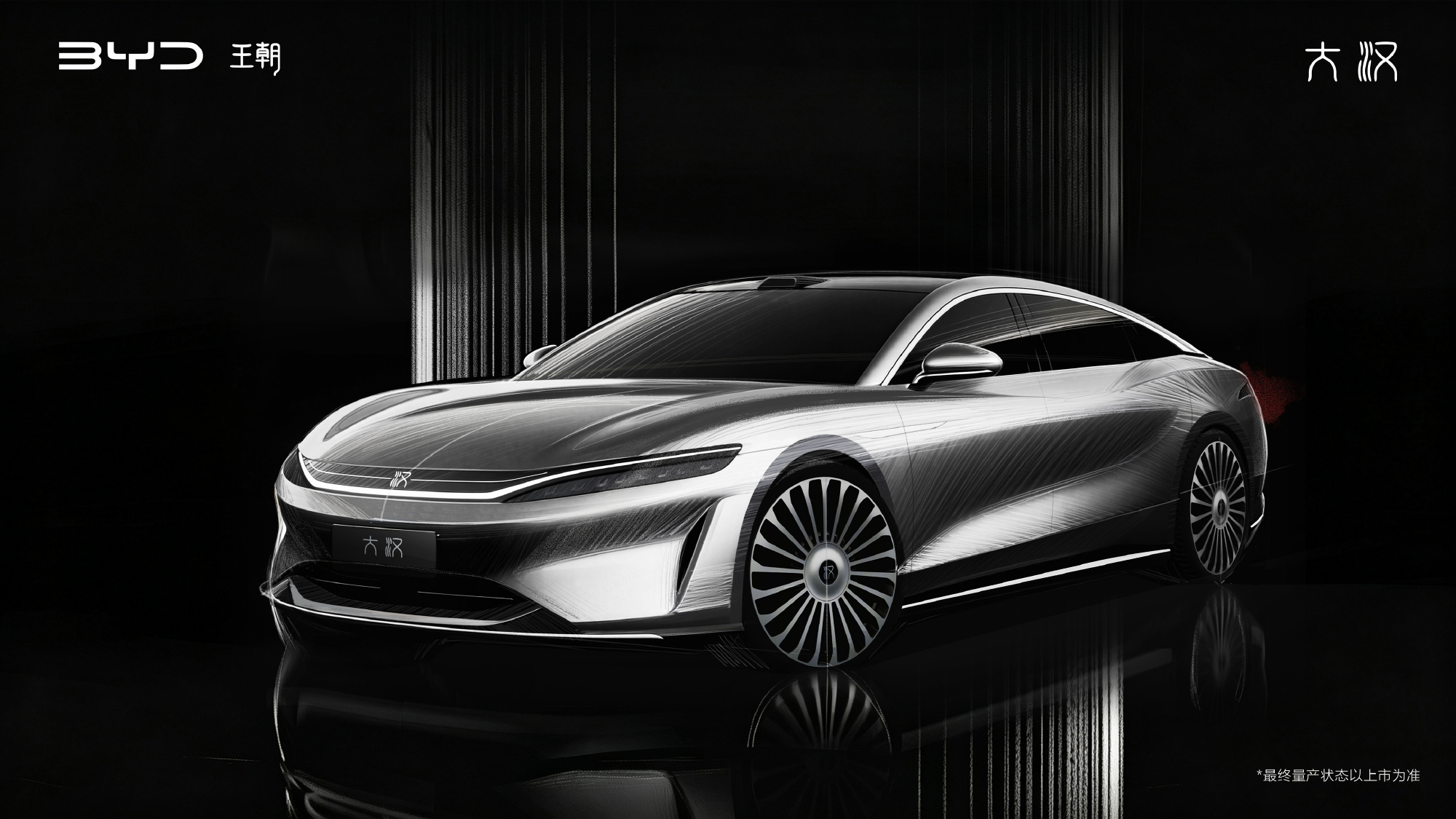
(Image source: BYD)
Judging from the official pictures, the Han inherits the two-tone color scheme of the Tang. Its signature color combination features white on the upper body and green on the lower body, presenting an overall upscale and steady style.

(Image source: BYD)
The Han adopts a classic three-box sedan design. The waistline along the side body runs straight and level with a slight forward diving stance. This design not only delivers the dignified aura of a flagship vehicle, but also ensures the exterior neither looks tacky nor rigid.
Judging from all disclosed materials and photos, the Han is fully qualified as the 9-series flagship of BYD’s Dynasty Line in terms of configurations and styling.
Reviving the Han Lineage: The Mission of the New Han
The Han nameplate carries immense strategic significance for BYD’s Dynasty Line.
For starters, the Han is the first model under the Dynasty Line developed exclusively as a new-energy vehicle with no gasoline version available from launch. It marks a milestone representing the full transition of the Dynasty lineup to electrification.
Furthermore, the Han was the Dynasty Line’s first model that successfully broke into the 200,000-yuan market segment.
Back in 2022, the peak sales year for the Han, annual deliveries exceeded 270,000 units, with monthly sales surpassing 30,000 vehicles for four consecutive months. It stood out prominently both in the overall new-energy vehicle market and the 200,000–300,000-yuan sedan sector.
Even in 2025, amid intensifying market competition, the entire Han family still recorded annual sales of 180,700 units, solid proof of its enduring market competitiveness.
That said, the original Han debuted in 2020. After six years on sale, it was time for the older generation model to exit the market.
BYD launched the HanL last year as its intended successor. Nevertheless, hampered by multiple factors including exterior design and configuration combinations, the HanL suffered weak sales in the later stage and was eventually discontinued.
Consequently, the task of reviving the Han product family falls on the new Han.
Dianchetong (ID: dianchetong233) holds the view that as the 9-series flagship of the Han family, the new Han occupies a parallel position within its lineup to that of the Tang flagship among all Tang vehicles. Both models fire the opening shot for their respective lineages’ revitalization and lift the overall product positioning of their vehicle families.
The top-tier 635km all-wheel-drive flagship variant of the 2022 TangEV was priced at 342,800 yuan. By contrast, the premium Shengshi Edition of the latest TangEV retails for 309,900 yuan.
The 2022 HanEV Qianshan Cui Edition carried a sticker price of 329,800 yuan. It remains to be seen whether the top trim of the new Han can push pricing back above the 300,000-yuan threshold.
One key distinction separates the new Han from the Tang flagship: the Tang flagship is the first Tang model to adopt a 2+2+3 seating layout, greatly diversifying seating arrangement options for the Tang lineup.
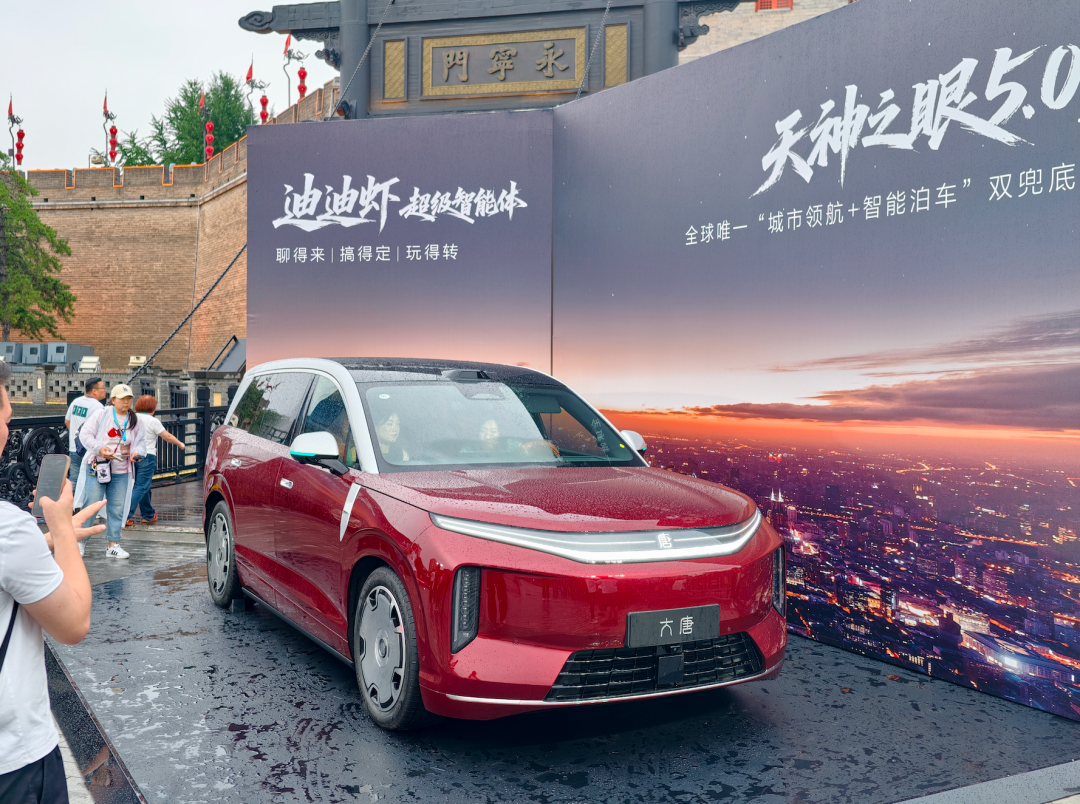
(Image source: Photographed by Dianchetong)
As the flagship sedan of BYD Dynasty Line, the new Han is expected to focus on rear legroom and riding experience to deliver superior comfort for backseat passengers.
Notably, BYD recently unveiled the 8-series Tang, the all-new successor to the current Tang model. It features dimensions and wheelbase nearly identical to the discontinued Tang L, functioning as an upgraded iteration of Tang L.
This suggests that the upgraded 8-series Han, refined based on Han L, will hit the market later as the replacement for the existing Han lineup.
The high-end positioning belongs to the 9-series new Han, while the 8-series Han takes charge of mass sales. These two models shoulder the responsibility of revitalizing the entire Han vehicle family.
The Final Puzzle Piece of BYD’s Flagship Layout
From the perspective of BYD’s overall brand development, the new Han means far more than merely a flagship sedan. It acts as a pivotal model that completes BYD’s flagship product portfolio and forms a closed-loop high-end layout. It also marks a crucial turning point for BYD’s transition from volume-driven leadership to value-oriented growth.
Over the past few years, BYD prioritized expanding its market share in the new energy vehicle sector. Consequently, the Han and Tang flagship models had dual obligations: maintaining brand premium while driving robust sales volume. This created an unavoidable dilemma between sustaining an upscale brand image and guaranteeing high sales figures.
Thanks to BYD’s overall product line optimization and adjustment, the brand’s strategy to reorganize and revamp its flagship product range has become increasingly clear.
Within Dynasty Line, the new Tang serves as the flagship SUV, and the 8-series Tang caters to mainstream mass sales. For sedans, the new Han elevates brand positioning, while the upcoming 8-series Han is projected to achieve larger sales volume.
Ocean Line adopts an identical development logic.
The early launch of Seal 08 and Sea Lion 08 took place before the full rollout of Dynasty Line’s 8-series vehicles. Leveraging differentiated styling and positioning of Ocean Line, BYD has supplemented its mid-to-high-end product matrix in advance and secured an early foothold in the mainstream 200,000–300,000-yuan consumer segment.
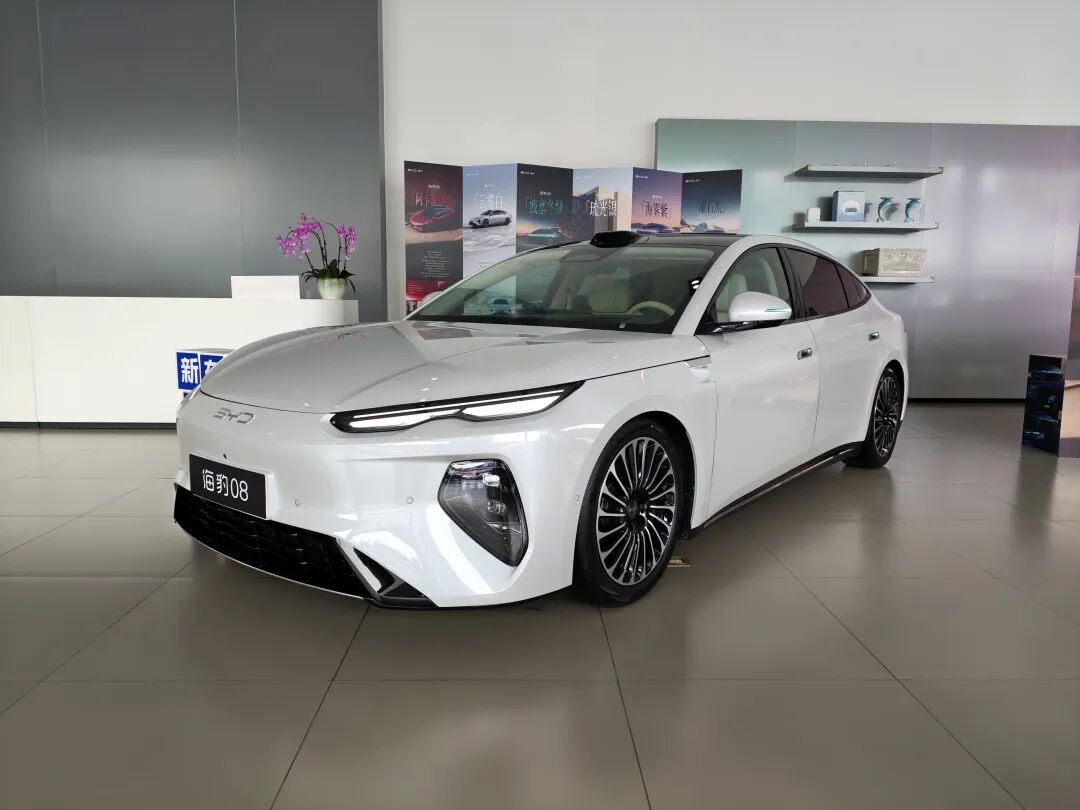 (Image source: Photographed by Dianchetong)
BYD’s flagship product matrix will be officially completed after the launch of Ocean Line’s Seal 09 and Sea Lion 09, as well as Dynasty Line’s 8-series Tang and 8-series Han. The bugle call for BYD to make a strong comeback in the 200,000–300,000-yuan price range will officially sound.
Once Dynasty Line and Ocean Line gradually enrich their product lineup covering the 200,000-yuan and 300,000-yuan segments, BYD gains far more than several individual car models. Instead, it obtains a complete flagship system capable of long-term sustainable competition.
In light of the construction logic of BYD’s overall product matrix, the new Han is one of the most crucial pieces in its flagship vehicle layout.
For Dynasty Line and BYD as a whole, the Han product family undertakes more than sales targets. Its more important mission is to rebuild the premium positioning of Dynasty’s flagship sedans with outstanding design and comprehensive product strength.
In addition, the upcoming new Han will echo the launched flagship Tang, restoring Dynasty Line’s dual flagship layout consisting of a flagship sedan and a flagship SUV.
With Dynasty Line and Ocean Line rounding out their flagship product lineup, BYD has greater confidence to compete for market share in the 200,000–350,000-yuan market.
Competition within this price bracket will no longer focus on vicious price and configuration competition, but on the rationality and clarity of each brand’s product matrix. Judging from its current layout, BYD is fully prepared for the next round of market competition.
The launch of the new Han is not merely an upgrade to the flagship lineup of BYD Dynasty Line, but also an epitome of Chinese automotive brands continuously breaking into the core premium sedan market.
When systematic product matrices replace scattered single-model breakthroughs, we have ample reason to expect BYD to retake its position in the high-end market and blaze a brand-new upward development path for Chinese auto brands.
July 31 marks the grand opening of ChinaJoy 2026, themed “Journeying with AI.”
A total of 900 entertainment-related exhibitors—including Tencent, NetEase, Sony, Qualcomm, MaiCong, and QingXian—will jointly present a global feast for the entertainment industry.
How will AI-enhanced hardware brands—including terminals, peripherals, robots, displays, and chips—collaborate cross-industrially with game content creators to deliver novel entertainment experiences?
Led by LeiTech founder and Editor-in-Chief Luo Chao, the LeiTech ChinaJoy 2026 reporting team will soon descend upon Shanghai—stay tuned for comprehensive coverage.