 雷科技
雷科技




















News dated August 7: Luo Yonghao showered high praise on the upcoming Honor Robot Phone in his latest podcast episode.
Anyone familiar with Luo knows he is notoriously hard to please.
Back when he ran Smartisan, he spared no criticism of everyone, including industry peers. Very few products managed to win his approval. Now that he has stepped back from frontline live-stream sales, he still speaks his mind when occasionally commenting on digital gadgets. He calls it as he sees it — good is good, bad is bad, with no reservations.

Image source: Weibo
So I was quite surprised to see him publicly endorse the Honor Robot Phone with such overwhelmingly positive remarks.
In the latest episode of Luo Yonghao’s Crossroads, Luo specifically talked about this unreleased robotic phone from Honor.
He described the device as highly futuristic, believing everyone who sees it will be amazed. Moreover, it is an innovative product pioneered by a Chinese manufacturer.
Words like “highly futuristic” and “amazing” carry considerable weight coming from Luo.
Luo recalled that when he first entered the smartphone industry, most domestic manufacturers were copying foreign products, the era often jokingly referred to as the “shanzhai” phase. Back then, Smartisan was among the few daring to pursue differentiation. Although it ultimately failed commercially, it strove for innovation.
Times have changed, however. The domestic smartphone sector has delivered numerous innovations in recent years. Many designs were first introduced by Chinese brands, and foreign manufacturers have begun drawing inspiration from us instead. The full-screen display, for instance, was pioneered by Chinese companies.
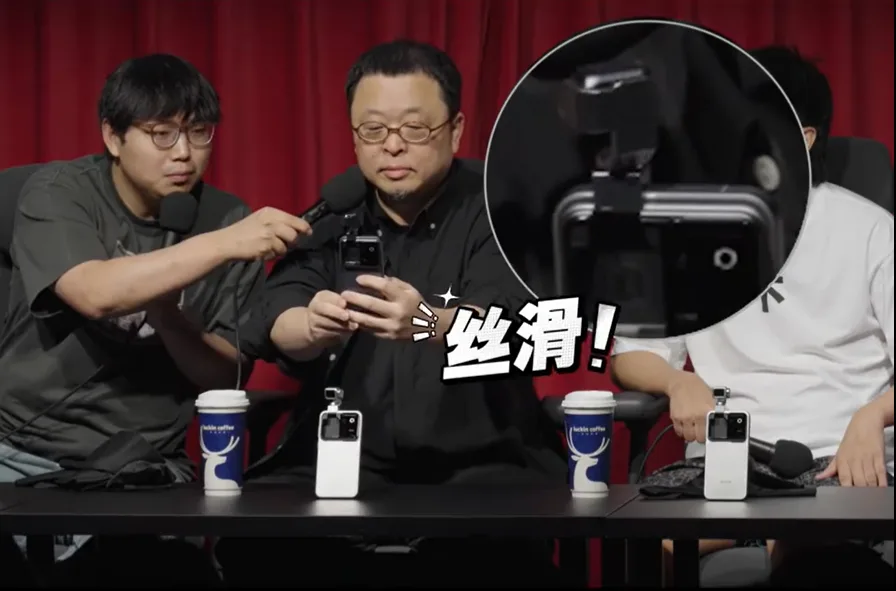
Image source: Weibo
Xiaolei BIBI(ID: xiaoleibbb) couldn’t agree more. Over the past five or six years, tangible innovations such as fast charging, high-refresh-rate screens, foldable displays and periscope telephoto lenses have mostly been brought to market first by domestic brands.
By contrast, Apple and Samsung tend to lag behind. They only roll out many features after domestic manufacturers have proven their market viability.
According to Luo Yonghao, at first glance the device seems to be nothing more than a simple combination of a gimbal camera and a smartphone. However, hands-on experience reveals it is far more complex than it appears.
It involves extremely sophisticated engineering challenges: how to fit an entire mechanical gimbal into the limited internal space of the phone body, how to guarantee smooth, jitter-free lens rotation with precise control, and so on. Each of these represents a major hurdle.
More importantly, many core components were independently developed through the brand’s own R&D investment. On the software side, the gimbal mechanism must be deeply integrated with AI algorithms to enable functions including intelligent tracking and automatic camera movement. Achieving seamless coordination between hardware and software poses immense difficulties.
That explains why Luo remarked that this product cannot be easily copied. Even if competitors force out a similar device, their production costs will inevitably be far higher than Honor’s.
During the podcast, Luo also demonstrated an intriguing feature on the spot — panoramic group selfies using the front camera.
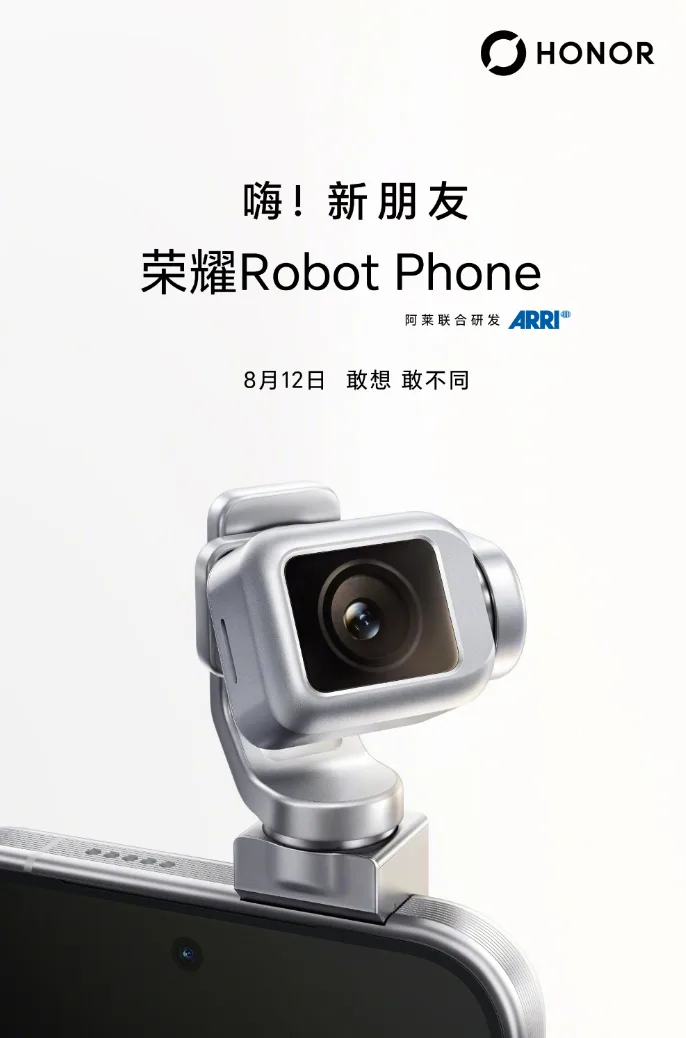
Image source: Weibo
Once the group photo function is activated, the gimbal camera automatically pans around to capture everyone nearby before stitching the footage into one complete group photo. There’s no need for everyone to huddle together or ask strangers for help — simply place the phone in the middle.
That said, Xiaolei BIBI (ID: xiaoleibbb) believes this is one of the rare devices in recent years that delivers a genuine breakthrough in smartphone form factor.
People have long grown weary of the conventional bar-shaped smartphone design. Year after year, new product launches merely feature incremental upgrades: slightly more powerful processors, higher-resolution cameras and brighter screens, amounting to minimal, incremental improvements.
Honor deserves credit for daring to launch the Robot Phone at this juncture. It injects fresh vitality into the stagnant smartphone industry and explores new possibilities.
It is worth noting that pre-orders for the Honor Robot Phone have exceeded 200,000 across all sales channels since reservations opened at the WAIC (World Artificial Intelligence Conference) on July 18. First-day pre-order volumes have even surpassed those of all previous Honor flagship models.
The device is scheduled for official release on August 12, and I, Xiaolei, am eagerly looking forward to it.
Lastly, do you think robotic phones equipped with mechanical gimbals will become a future industry trend? Feel free to share your opinions in the comments, and let’s discuss together.
The world’s most important robotics industry barometer—the World Robot Conference (WRC) 2026—is set to make a powerful debut, followed immediately by the World Humanoid Robot Games.
Over 300 top-tier exhibitors—including Unitree, Zhiyuan Robotics, Qiyuan Robotics, Magic Atom, Galaxy General Robotics, Cloud Deep Robotics, and Lingxin Qiaoshou—will jointly showcase cutting-edge technologies and define the future of global robotics.
WRC 2026 will answer every fundamental question about robotics.
LeiTech’s WRC 2026 reporting team is heading to Beijing for exclusive on-the-ground coverage.