 雷科技
雷科技



























August 10, 2024 — The Hangzhou Intermediate People’s Court delivered its second-instance ruling in China’s first unfair competition case involving AI-generated fake “recommendation posts” — marking a landmark decision!
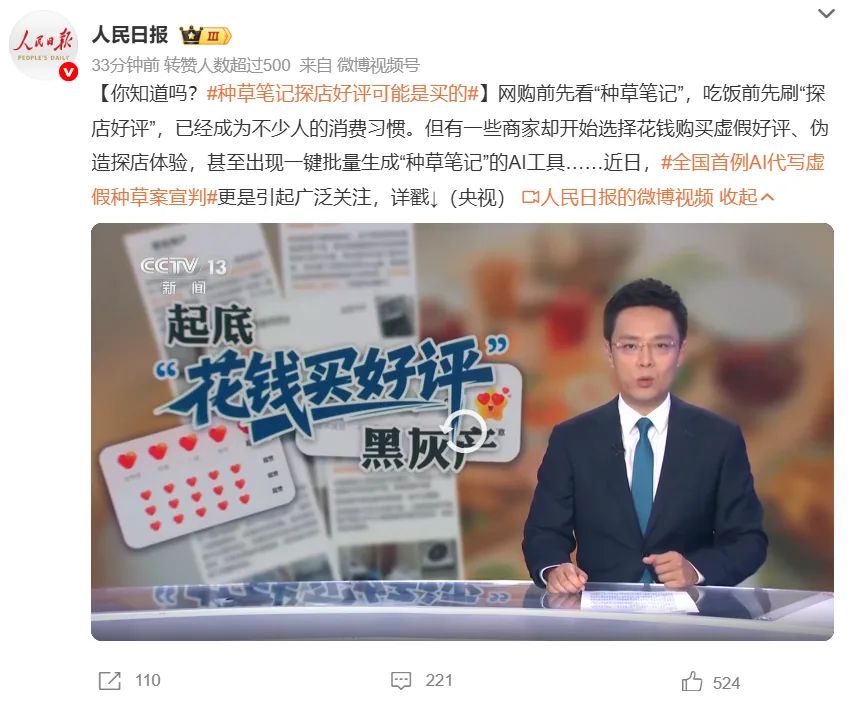
Image source: Weibo
Today, before heading out to try a new restaurant or making an online purchase, most people instinctively scroll through recommendation posts on social media platforms.
Yet some merchants have begun paying for fake positive reviews and fabricating on-site experiences—even resorting to AI tools that can generate dozens of “recommendation posts” with a single click.
This case draws a clear legal red line for all professionals profiting from AI-driven deception—and once again brings the issue of AI misuse squarely into public focus.
LeiTech’s Xiao Lei Bbb (ID: xiaoleibbb) walks you through this incident.
The two tech companies involved jointly operated an AI-powered writing tool specifically designed to generate “recommendation content” for social media platforms.
The tool supports multi-platform use—including web, mobile apps, and mini-programs—and features dedicated templates for recommendation copy, travel guides, and more.
Users input keywords and instantly generate full-length, platform-optimized posts—without ever experiencing the product or service firsthand. Entirely fabricated, seemingly authentic user experiences are generated solely by AI.
This model directly undermines the authenticity-based content ecosystem built by social platforms, prompting the platform operator to file an unfair competition lawsuit against the two defendants.
The Hangzhou Internet Court ruled in favor of the plaintiff in the first instance. Dissatisfied, the defendants appealed. The second-instance court upheld the original judgment, finding both companies guilty of unfair competition, ordering them to immediately cease infringement, and awarding RMB 100,000 in damages to the platform.
The court emphasized that while AI technology itself is neutral, businesses that deliberately develop such tools to induce and profit from the generation of fake recommendation content violate the law.
Many may wonder: “It’s just a few fake recommendation posts—does it really warrant court intervention?”
In fact, this case is merely the tip of the iceberg.
Recently, a wave of AI-facilitated violations and illegal activities has surged—and the scope of AI-generated fraud extends far beyond what most imagine.
The most widely discussed example is AI-assisted academic paper ghostwriting.
Numerous ghostwriting agencies leverage AI tools to rapidly produce manuscripts, generating hundreds of papers per day across vastly diverse disciplines.
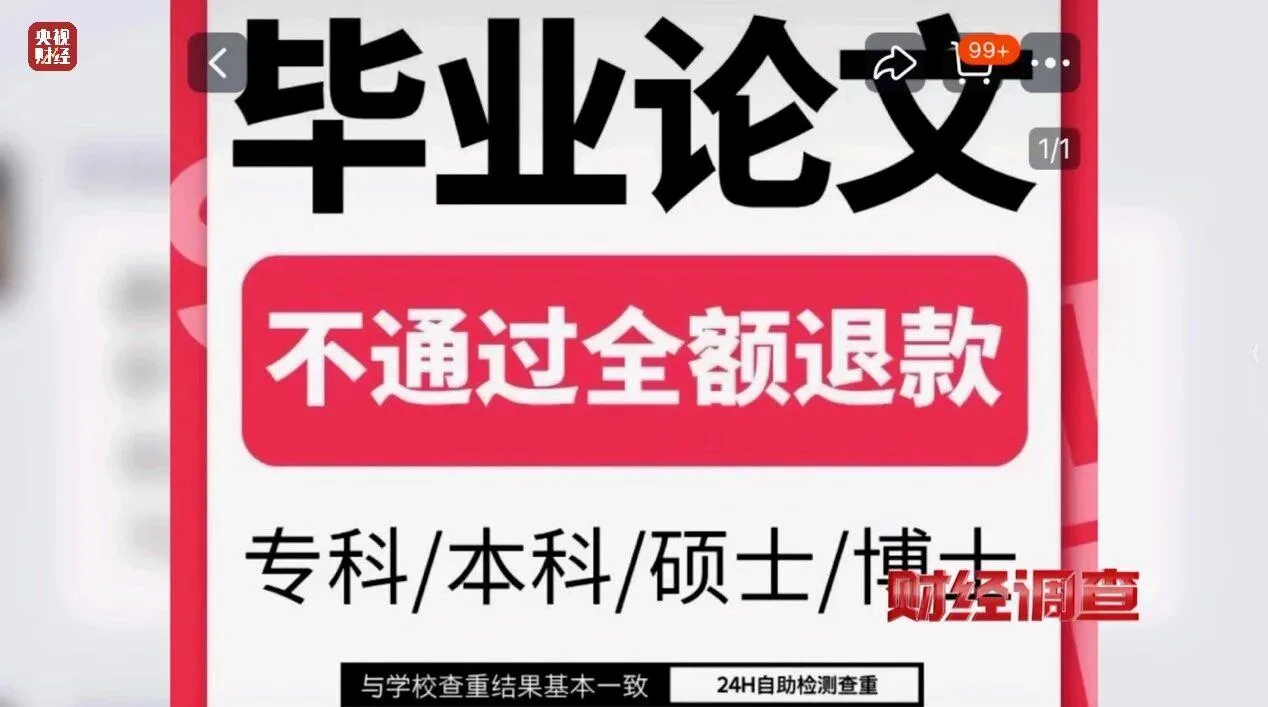
Image source: Weibo
Regulatory and judicial authorities are intensifying efforts against these large-scale, profit-driven ghostwriting operations.
Multiple cases nationwide have been prosecuted under the charge of “illegal business operation.” Meanwhile, the newly enacted Academic Degree Law explicitly defines ghostwriting and purchasing academic papers as academic misconduct—offenders face penalties including degree revocation and expulsion. The entire ghostwriting supply chain now falls squarely within regulatory scrutiny.
Another prevalent form of misconduct is AI-generated online rumors.
Earlier this year, the Ministry of Public Security disclosed 20 rumor-related cases—many involving AI-generated content.
Some individuals use AI to fabricate disaster imagery or tamper with official notices—spreading false information about work stoppages or school closures.
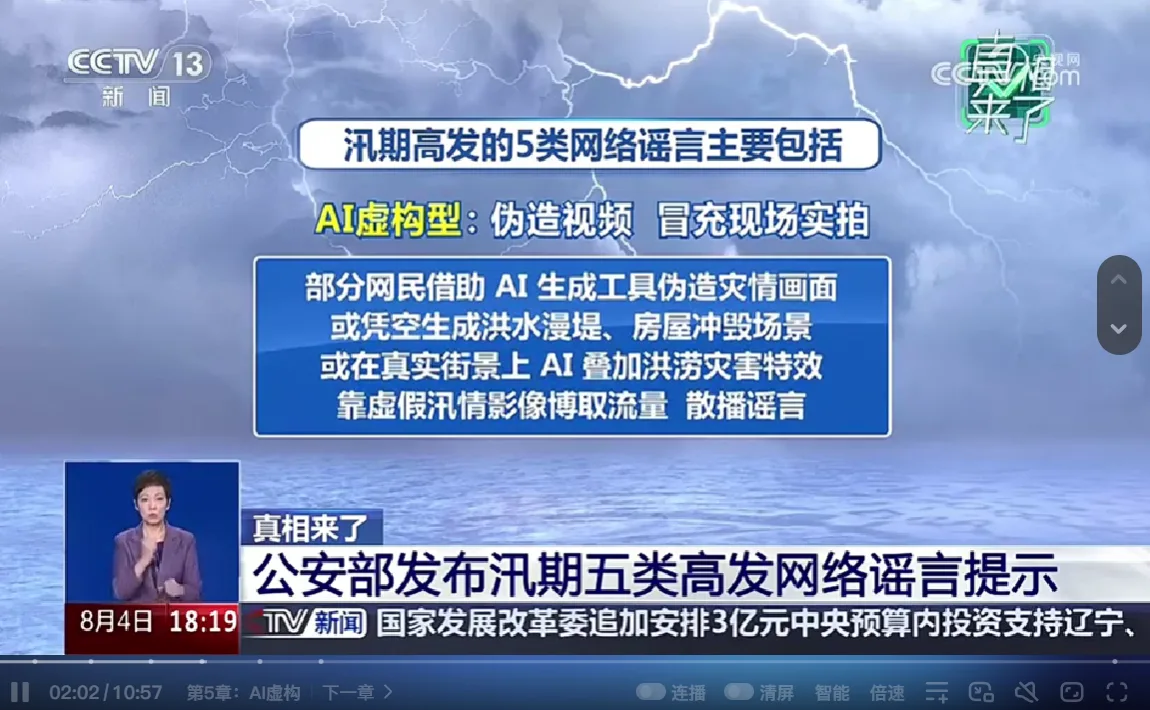
Image source: Weibo
Rumor-mongers seek only traffic; false information spreads rapidly, often triggering public panic. All involved parties received administrative penalties—a stark warning to everyone.
Faced with escalating AI-related misconduct, regulators have long taken action.
In April, the Cyberspace Administration of China launched the multi-month “Qinglang – Campaign to Rectify AI Application Misconduct,” targeting AI-generated misinformation, intellectual property infringement, impersonation, and other prominent issues.
Simultaneously, major internet platforms are tightening their policies.
For example, Douyin (TikTok China) explicitly prohibits merchants from using AI to fabricate non-existent dishes, invent hotel environments, or exaggerate travel experiences—curbing AI-driven deception at the content source.
Following the verdict, online discussion surged—with diverse public opinions emerging.
Many netizens support strict penalties, noting they no longer trust recommendation posts after repeated negative experiences.
Others adopt a more nuanced perspective: the problem lies not with AI itself, but with how it’s used.
If users genuinely visit restaurants or try products themselves—and simply use AI to polish wording or adjust formatting—that constitutes reasonable, ethical tool usage.
What truly warrants crackdowns are those who fabricate experiences entirely from scratch—zero real-world experience, zero actual testing—relying solely on AI to mislead consumers by masquerading as authentic users.
Still others argue such misconduct is inherently difficult to eradicate.
AI generative capabilities are advancing rapidly, and output realism continues to improve—making it nearly impossible for ordinary users to distinguish truth from fiction.
Honestly, such concerns are valid—but they shouldn’t justify inaction.
At LeiTech, we believe whether shopping online or exploring local venues, staying vigilant is essential.
Learning to verify content authenticity helps avoid being misled by false information and falling into pitfalls.
For merchants and content creators alike, upholding honesty and integrity remains non-negotiable.
Using AI to mass-produce fake reviews or fabricate non-existent experiences may yield short-term traffic and orders—but erodes consumer trust, damages brand reputation, and—as demonstrated in this case—may even trigger legal liability. Ultimately, it’s a losing proposition.
At its core, AI is simply an amplifier.

Image source: Doubao AI
Used responsibly, AI boosts efficiency and creates value; misused with ill intent, it becomes a vehicle for violations and illicit gains.
Only by guiding AI toward ethical, beneficial development can it truly deliver convenience to humanity.
Finally, Xiao Lei Bbb would like to ask: Have you ever visited a venue based on an online recommendation post—only to be disappointed? Share your stories in the comments!
The world’s most influential robotics industry barometer—the World Robot Conference (WRC) 2026—is set to make a powerful debut, followed closely by the World Humanoid Robot Games.
Over 300 top-tier exhibitors—including Unitree, Zhiyuan Robotics, Qiyuan Robotics, Magic Atom, Galaxy General Robotics, Cloud Deep Robotics, and Lingxin Qiao Shou—will showcase cutting-edge innovations, collectively defining the future of global robotics.
WRC will answer all pivotal questions about robotics.
LeiTech’s WRC 2026 Reporting Team is landing in Beijing for exclusive, in-depth coverage.