
 雷科技
雷科技




















Anyone who has played World of Warcraft likely has mixed feelings about murlocs. You’re traveling through Elwynn Forest when a horde of these creatures suddenly charges out from the riverbank, screeching loudly as they chase you. You can’t beat them, nor can you outrun them—utterly infuriating. Yet you have to admit, they’re among the most recognizable creatures in WoW, eventually even becoming Blizzard’s official mascot.
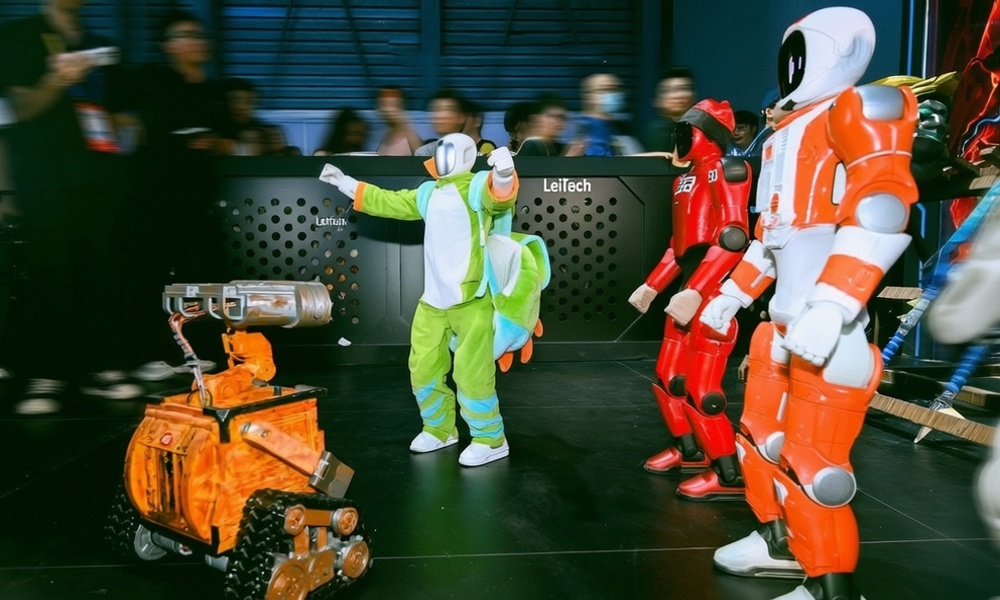
Now this iconic creature has been fused with robotics. At ChinaJoy 2026, Qiyuan Robotics, a subsidiary of Swancor Advanced Materials, announced a collaboration with Blizzard’s World of Warcraft to launch a limited-edition Murloc custom version of its Qiyuan Q1 robot. Built on the modular design and open-source software & hardware capabilities of the Q1 Explorer model, this murloc variant supports three form transformations: wheeled-legged, humanoid and quadruped, featuring 22 degrees of freedom and an AI auto-follow filming function.
Leitech (ID: leitech) witnessed the Qiyuan Q1 Murloc Custom Edition roaming the exhibition floor alongside convention cosplayers and dropping by booths for photo opportunities at the show. Sources reveal that the two parties plan deeper cross-promotions covering more events and in-game character IPs in the future.
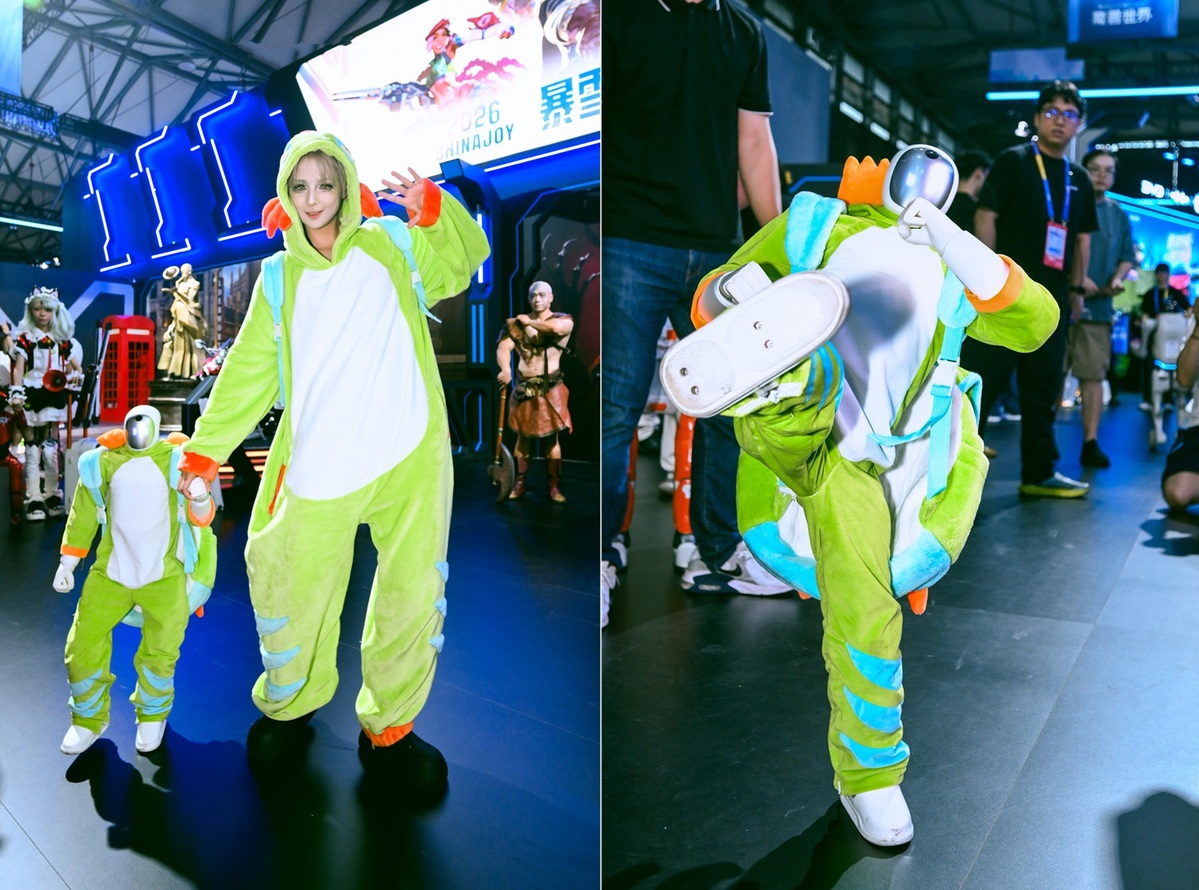
Image source: Qiyuan Robotics
This is not the first time robots have partnered with famous IPs. At this year’s GTC 2026 conference, NVIDIA, Disney and Google DeepMind jointly unveiled an Olaf robot from Frozen, which stole the spotlight. As of late March this year, Olaf has officially started its "shift" at Disneyland Paris.
On one hand, a rising domestic robotics firm has teamed up with a world-class gaming IP; on the other, a global chip giant has joined forces with a Disney IP. What such partnerships can bring to consumer-grade robots is well worth an in-depth discussion.
IP Collaborations Go Viral: Robots Are Now Doing Cosplay
Everyone knows how fiercely competitive the robotics space has become. According to IT Juzi statistics, financing for China’s embodied intelligence sector exceeded 93.5 billion yuan in the first half of 2026, a fivefold year-on-year increase across 322 funding rounds.
Amid this booming yet cutthroat landscape, IP co-branding has become a highly eye-catching strategy.
Picture a humanoid robot standing in your living room—what would you say to it? Most people’s first instinct would be to ask it to dance or perform tricks. Beyond that, many draw a blank. There is no emotional connection between you and the machine; you do not know how to interact with it, nor does it know how to engage with you.
This is where IP collaborations shine. A long-time World of Warcraft player will react entirely differently to the Murloc-themed Q1 robot compared to a generic robot. Similarly, children at Disneyland will respond in completely distinct ways when Olaf walks toward them versus an unknown robot.
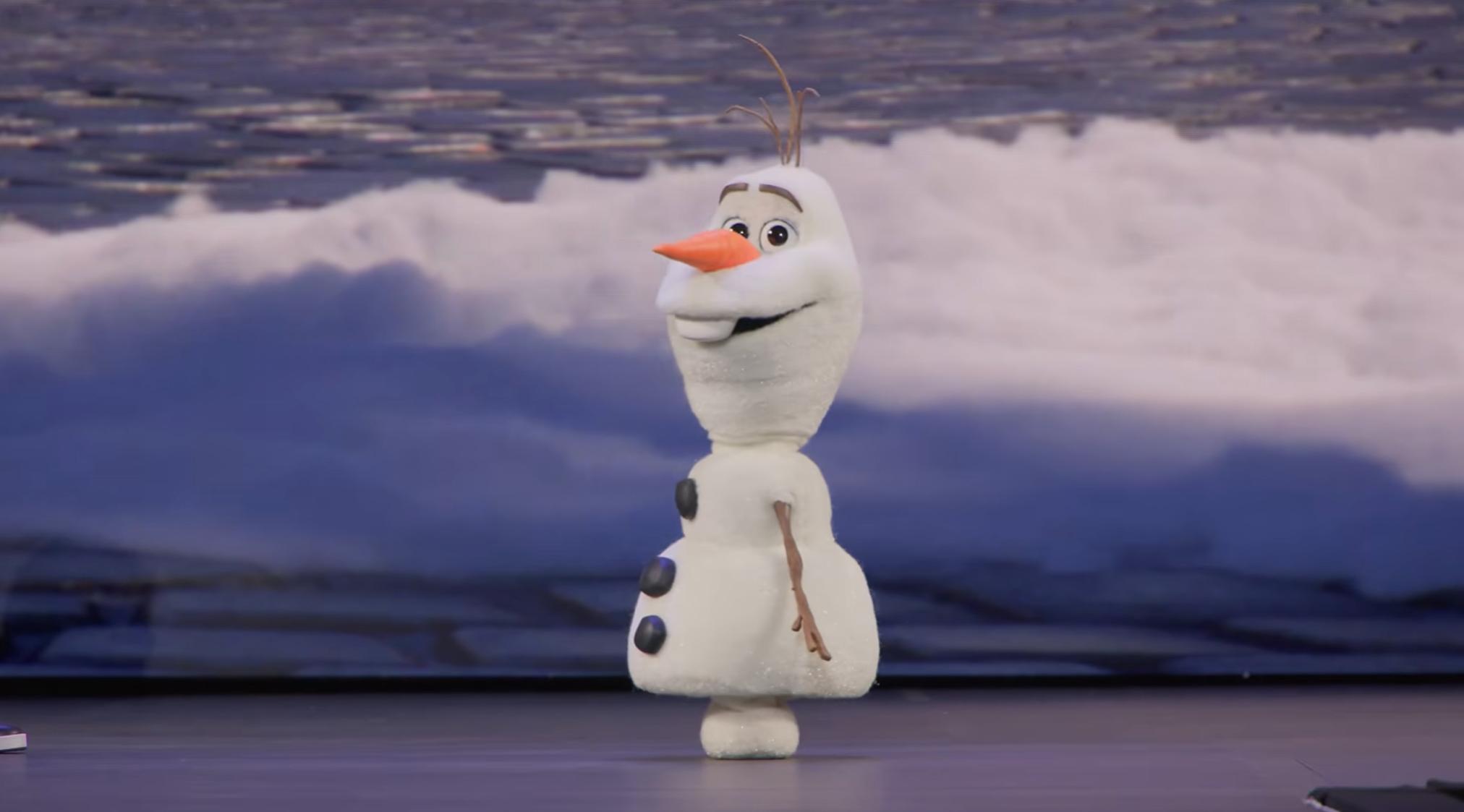
Image source: NVIDIA
Humans often struggle to find conversation starters when meeting strangers, and the same applies to interacting with robots. However, if the robot takes the form of a familiar character like Olaf, you can easily picture its personality and backstory, instantly forming an emotional bond. This directly addresses one of the biggest headaches for consumer robots: crafting a positive first impression.
Take the WALL-E robot launched by Lexiang Technology last year as an example. It carried a pre-sale price of 35,999 yuan. This tracked robot can haul loads ranging from 20 to 30 kilograms, while also doubling as a portable speaker and outdoor power bank. This is where IP’s value shines through. There is no need to explain the robot’s functions in detail—simply calling it “WALL-E” is enough for everyone to grasp its identity.
If advanced robot intelligence paves the way for real-world commercial deployment, IP collaborations tackle the hurdle of initial human-robot encounters. You may know nothing about a robot’s intelligence or safety features at first glance, yet familiarity and fondness for its licensed character will draw you in to give it a try. This is exactly the effect Qiyuan aims to achieve with its World of Warcraft partnership. Built on this initial trust rooted in beloved IP, users will be willing to pause and explore the robot’s full range of capabilities.
From this perspective, IP co-branding stands out as the most reliable strategy for consumer robots to gain mainstream popularity right now. That said, grabbing users’ attention via IP is merely the first step. Retaining their interest long-term ultimately hinges on genuine technological strength and practical functionality.
Robots Roll Out Diverse IP Collaborations: Character Restorations & Toy-Style Designs
Interestingly, manufacturers take vastly different approaches when partnering robots with entertainment IPs.
The Qiyuan Q1 Murloc Edition is essentially a robot dressed up in cosplay attire. The Q1 itself is a general-purpose robot, and the Murloc variant features a custom murloc exterior shell built upon the base model. What’s more, the Q1’s structural exterior parts are open-source, meaning users can 3D-print custom casings on their own. Theoretically, countless IP-themed versions can be created, bringing far richer gameplay possibilities. This method boasts two major advantages: low entry barriers and high flexibility, allowing a single robot chassis to fit multiple IP skins.

Image source: Qiyuan Robotics
By contrast, Disney’s Olaf robot was built entirely from scratch to match the character, with its mechanical framework, motion algorithms, voice lines and dialogue all faithfully recreated to mirror Olaf from the film. The Walt Disney Imagineering team engineered an asymmetrical leg structure exclusively for it, and the robot underwent millions of reinforcement learning training cycles in virtual simulations before it could walk naturally.
Disney is capable of such elaborate development not primarily due to its formidable technology (impressive as it is), but because it owns the IP outright. Its engineering and creative teams operate within the same corporate ecosystem, eliminating costly IP licensing fees from its development budget. Even so, Disney’s bespoke approach is unlikely to become an industry-wide standard practice.
Another category consists of toy robots. YueRan Innovation specializes in interactive talking toy robots. Its two flagship lines, BubblePal and CocoMate, have surpassed 300,000 total units sold, targeted at children. The Ultraman-themed CocoMate retails for 799 yuan, and hit its single-day GMV target nearly ten times faster than the original model.
Lastly, there are more abstract celebrity IP collaborations. Super Legend Holdings, the listed firm tied to Jay Chou, announced a partnership with Unitree Robotics in July 2025 to develop consumer robots infused with celebrity IP. The two sides jointly founded a joint venture named YuStar Entertainment that November. While the final form of their robot remains undisclosed, the collaboration serves as clear evidence that robots are evolving from purely tech gadgets into entertainment and everyday consumer goods—a shift that sends an unmistakable market signal.
Despite their divergent strategies, all manufacturers share the same core goal: to accelerate the real-world commercial rollout of robots. Companies hold differing views on whether a simple cosmetic shell makeover suffices, or if full character reconstruction à la Disney is necessary, and no universal industry blueprint has emerged to date.
Robots and IPs Are Racing Toward Mutual Integration
Back to Qiyuan’s collaboration with World of Warcraft. Blizzard has always exercised extreme caution when licensing its intellectual property, and World of Warcraft stands as its most valuable asset. Iconic characters like Murlocs, which carry over a decade of players’ memories, are not available to just any manufacturer that comes knocking.
Qiyuan boasts a solid product foundation. At exhibitions, the Q1 robot can move autonomously, avoid obstacles independently, and engage in voice interactions with audiences. Blizzard had no fear that its beloved character would be paired with an inferior robot prone to stumbling after a few steps, which would tarnish the IP’s reputation.
The co-branding partnership between Honor Robots and Zhang Xue Motorcycle also stems from aligned brand spirits. This past April, during the Humanoid Robot Half Marathon in Yizhuang, Beijing, Honor officially announced its cooperation with Zhang Xue Motorcycle.

Image source: Honor
When interviewed by relevant media about this partnership, a senior executive from Honor stated: "Zhang Xue and Honor share identical core values. Both are standout domestic Chinese brands that have weathered existential crises and refused to back down against adversity. Honor carries this same spirit today, and our collaboration with Zhang Xue is rooted entirely in this aligned brand ethos."
In other words, robot makers are hunting for suitable IPs, and conversely, IP owners are also seeking robots that match their brand identity—robots serve as a natural vehicle to bring IP to life in tangible, interactive forms.
He Jiabin, CEO of Mengyou Intelligence, told National Business Daily that there are currently two primary avenues to sustain an IP’s longevity: themed park experiential consumption and traditional licensed merchandise. AI robots are poised to emerge as a third core format.
To license its IPs for robotic applications, Hasbro, the renowned toy and entertainment enterprise, even launched an AI studio named Sixth Wall and rolled out a system called CharacterOS. The platform packages the thought patterns, behavioral logic and real-time response capabilities of iconic characters such as Optimus Prime and Megatron into licensable personality models.
Put simply, Hasbro licenses far more than just character visuals; it licenses each character’s inherent personality—how they think, speak and react to situations. The firm refers to this as "behavior licensing."
IP owners have gone to great lengths to materialize animated characters in the physical world.
The logic is easy to grasp. As children, many of us dreamed of cartoon robots stepping out of screens into reality, if only to chat and keep us company. Back then, technological limitations made such fantasies unattainable, yet the AI era has turned them viable. In the past, you watched Optimus Prime confined to a screen, separated from you by a display. Thanks to behavior licensing, you can now converse directly with a physical Optimus Prime robot that responds true to the character—an experience entirely distinct from watching animations or collecting action figures.
That said, this industry is still in its infancy. Consumer-facing robots face an unavoidable barrier before mass household adoption: mass production. As reported by Yicai, most consumer robot products remain in low-volume trial production phases. R&D, molding and supply chain costs have not been amortized across large output volumes. Exorbitant price points deter buyers, while lengthy delivery cycles drive potential customers away.
Unitree Robotics is projected to generate over 1 billion yuan in revenue in the first half of the year, representing year-on-year growth exceeding 300%. While this growth outpaces most peers in the industry, its scale still falls far short of meeting mass consumer market demand.
Nearly everyone from our generation nurtured a childhood robot fantasy. Who hasn’t daydreamed while watching Doraemon that a blue robotic cat would emerge from their desk drawer, equipped with a pouch full of gadgets to fix every trouble and stay by your side every day? As we grew older, we recognized it was pure fiction and gradually let go of that dream.
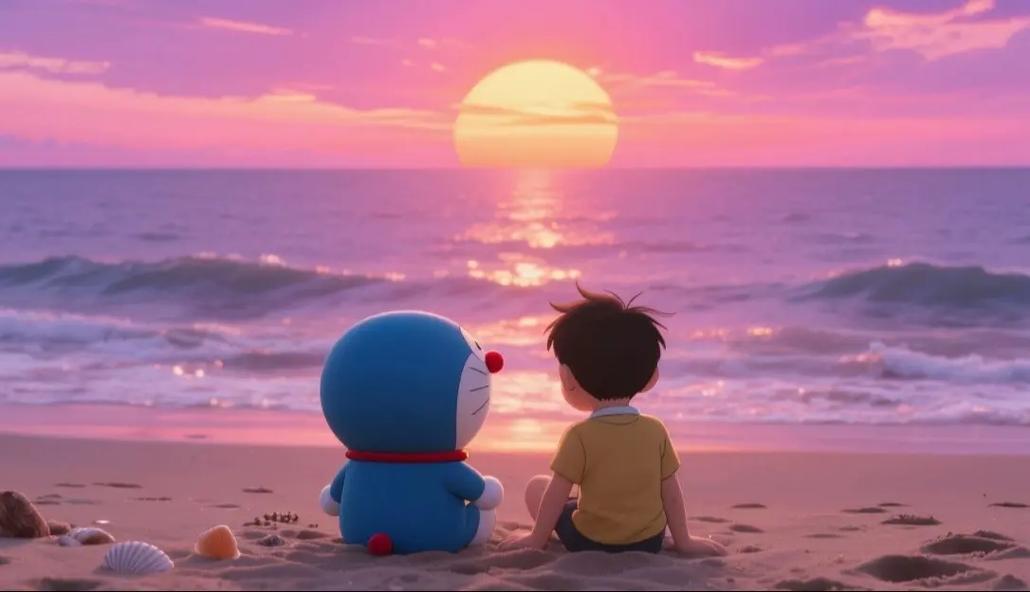
Image source: Doraemon movie still
Robots are truly making their way into ordinary households now, able to take the form of our favorite fictional characters. For us generation born in the late 1990s and early 2000s, IPs essentially revive the robot fantasies we held as kids.
One last noteworthy update: the 2026 World Robot Conference (WRC) will be held in Beijing from August 19 to 23 under the theme "Human-Robot Symbiosis, Integration of Industry and Demand". According to official website information, more than 300 exhibitors will attend this year, marking a 36% increase year-on-year. The event will showcase over 2,000 exhibits, including more than 150 debut new products. Meanwhile, over 10,000 contestants from more than 20 countries will compete in the Robot Contest Finals.