
 雷科技
雷科技

























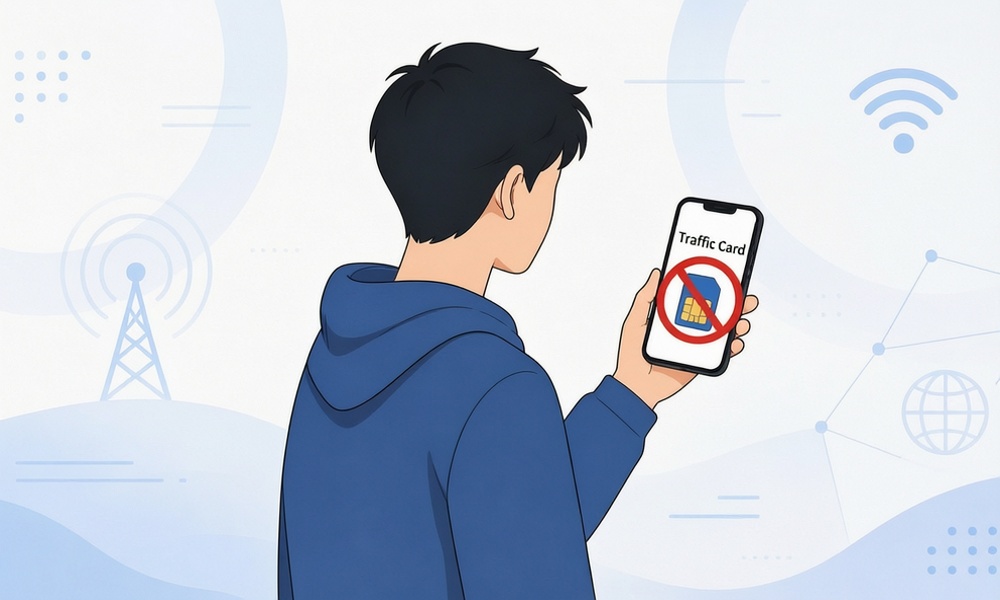

Discussions about data SIM cards have heated up over the past few days, and the reason is simple — cheap data SIM cards are gone.
It all started when a netizen suddenly posted an internal notice claiming that the three major telecom operators would officially suspend SIM card applications via third-party online channels such as internet platforms starting August 1st. Only official apps, official websites and other official online channels would remain available.
Many netizens were alarmed by the news: Are these data SIM cards going away? What if I run out of mobile data? Existing subscribers need not worry. As long as they do not actively switch plans, they can continue using their current service with unchanged rates and data allowances.
However, the news came as a heavy blow to those who had not yet applied for such cards. At first, many netizens hoped it was fake. No official announcements had been released by the three major operators, and channel-exclusive SIM cards were still available on platforms like Douyin. Some state media outlets even reached out to the operators, only to receive replies that they had not received relevant notices for the time being.
Unfortunately, August 1st proved the rumors true. If you search for data SIM cards on platforms including Douyin now, only China Broadcasting Network cards are available. Options from China Mobile, China Telecom and China Unicom have completely disappeared.
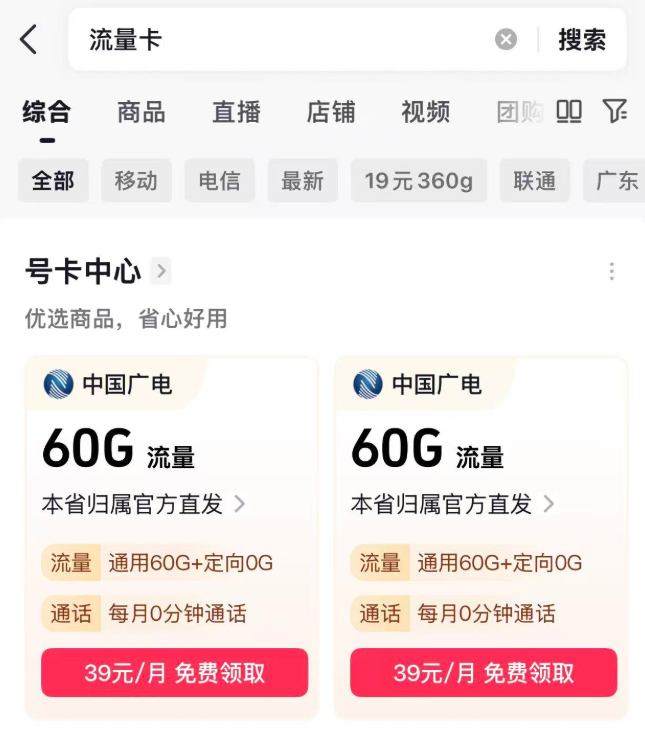
Image source: LeiTech
Meanwhile, the three major carriers released an announcement on the same day titled Announcement on Standardizing SIM Card Services via Internet Channels, virtually marking the demise of data SIM cards sold through third-party channels. While the carriers have not fully shut down online SIM card application services, applications are now only available through official websites and official apps, with very limited rate plans to choose from.
Unsurprisingly, netizens voiced widespread disappointment. Some rushed to apply for cards right before the suspension took effect and managed to secure subscriptions. (A reminder: reselling mobile phone SIM cards is illegal.) Still, more netizens are wondering why these widely popular online data SIM cards were pulled overnight. Leitech (ID: leitech) will fully explain the reasons in this article.
Rumors were refuted one day, yet the data SIM cards vanished the next.
These data SIM cards have long been promoted for low prices and abundant data. Official plans usually offer only dozens of gigabytes for fifty to sixty yuan, while livestream platforms advertise eye-catching deals such as 300GB for 19 yuan. In terms of data volume per yuan, the gap exceeds 15 times.
How can the same carrier offer such vastly different packages? First, one fundamental truth should be clear: preferential offers never come out of nowhere.
Anyone who has purchased data SIM cards promoted on Douyin or Bilibili may notice that they are shipped from remote cities. When making calls with such cards, the caller location also shows that same city. I recall an acquaintance who signed up for one; when he called his family, the call was mistakenly hung up as spam.
In fact, many internet-exclusive data SIM cards were initially designed by local branches of telecom operators to rapidly acquire new customers. Local operators provided these plans along with subsidies. By scaling back benefits such as voice calls, they allocated most package resources to mobile data to attract users.
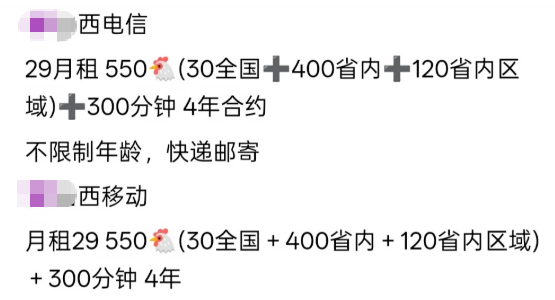
Image source: Xiaohongshu
However, although advertisements promote plans at 19 yuan for a certain volume of data, the original package price is usually higher. Carriers bring the price down via limited-time discounts and subsidies. Generally speaking, the 19-yuan monthly fee is rarely permanent. Most discounted rates last for half a year to one year, after which the price will rise to 39 yuan or higher.
Naturally, some SIM card vendors mislead users, claiming they can renew discounts before expiry or help users apply for new cards to extend preferential terms. Most modern smartphones support Dual SIM Dual Standby. For many people, one card can be kept for calls with acquaintances while the other is used solely for mobile data, making replacements convenient.
Furthermore, many data SIM cards combine general data and app-specific data. For instance, numerous data cards sold on Douyin include Douyin-exclusive data, which can only be consumed when browsing the platform. Such app-specific data receives subsidies from Douyin itself, serving as an effective tool for carriers to attract users at low costs.
Thanks to joint subsidies from local telecom branches and content providers, these SIM cards can offer large data allowances at low prices. Yet this arrangement creates a fundamental problem: the more cards sold, the greater the losses incurred.
Behind Low-Cost Packages: The Three Major Carriers Wage a Loss-Making Price War
For local carrier branches, subsidizing data card rates is essentially a strategy to seize market share and acquire new users. These discounted packages therefore often come with strings attached, such as a requirement to keep the service active for two years before cancellation. Meanwhile, package discounts only last one year, with rates reverting to 59 yuan starting in the second year.
This pricing structure allows carriers to recoup the subsidies offered in the first year during the second year. If subscribers continue using the service afterwards, carriers generate pure profits. As mentioned earlier, however, some agents lure customers by promising assistance with card replacement to retain discounts once preferential periods end — and many of these promises cannot be trusted, as agents may simply disappear.
If you have come across content creators promoting data SIM cards on platforms such as Bilibili, you will notice most of their accounts are newly created. You place an order through their ad links, but when you return after one year seeking help to switch cards, the accounts have been deleted and the vendors have vanished.
At this point, even platform customer support can offer no assistance. No official after-sales service exists for these SIM cards, and payments on most e-commerce platforms cannot be held for a full year. Merchants thus exploit a scheme: quickly register new accounts, sell SIM cards, then abscond. In this way, they pocket commissions from carriers while scamming consumers.
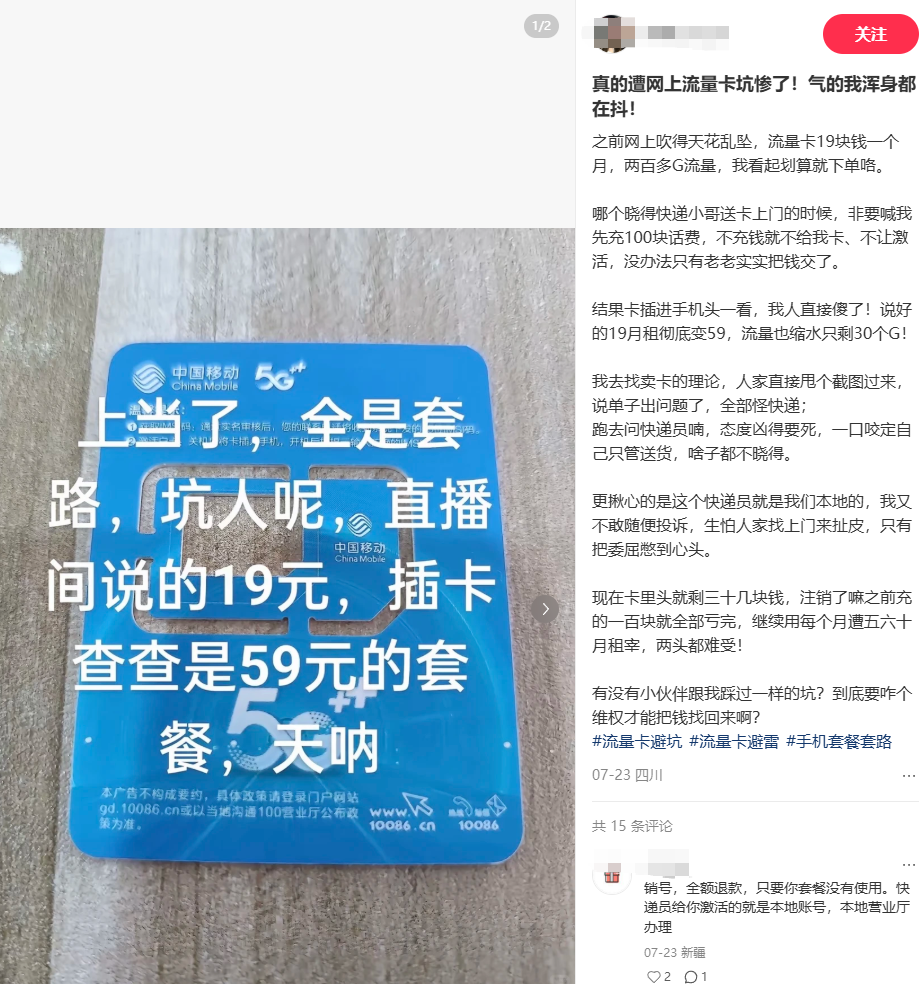
Image source: Xiaohongshu
In fact, these agents are also a headache for telecom carriers. When users cannot reach the sellers, they have no choice but to contact carrier customer service. Faced with these inexplicable complaints, resolving them means pure losses; if ignored, users will file complaints with the Ministry of Industry and Information Technology, which damages performance ratings. Carriers are therefore caught between a rock and a hard place.
What troubles carriers even more is that these discounted SIM cards, originally intended for specific cities and counties, are being sold nationwide via online platforms. Although the telecom operators appear unified, they have branches at provincial, municipal, district and county levels, each subject to KPI requirements for user growth.
For branches facing heavy business pressure, they care little about where the SIM cards end up as long as sales are made. However, this creates problems for operators in other regions. Data consumption increases operating costs: the user growth KPI is credited to the carrier branch where the SIM card is registered, yet the data usage costs fall on the carrier serving the actual user.
It was manageable when only a small number of such data SIM cards circulated, yet complaints from local branches in these provinces and cities grew as sales surged. Furthermore, in the race to attract customers, the three major carriers kept cutting data plan prices and raising agent commissions. Such vicious competition pushed promotional expenses for distribution channels even higher. In the end, the three carriers found that while they acquired many new users, they also suffered substantial losses.
Additionally, many merchants exploited online SIM card application services to fraudulently collect users’ personal data. Coupled with the fact that operating costs had outpaced returns from customer acquisition, the three major carriers made the tough decision to shut down these channels entirely.
Truth be told, carriers would likely keep offering subsidies and endure mild losses if this happened a few years ago. But with mobile networks and smartphones nearing full market penetration, there are far fewer new users left to capture. Meanwhile, channel costs have visibly soared.
When losses far outweigh gains, the three major carriers naturally stop providing subsidies.
User demand remains, so low-cost plans will make a comeback sooner or later.
The popularity of data SIM cards essentially stems from the high pricing of official plans. Take China Telecom as an example. Its 39-yuan package includes only 5GB general data plus 30GB app-specific data, which gets used up quickly for video streaming, forcing users to purchase extra data add-ons.
Frankly, simply pushing users to buy standard SIM plans without tackling this core issue will only trigger widespread dissatisfaction and may fuel a grey market — an outcome carriers want to avoid. More importantly, competition among the three major carriers will not disappear. If one carrier cuts rates to seize market share, it will likely drag the other two into another round of price wars.

Image source: LeiTech
What’s more, China Broadcasting Network is watching closely on the sidelines. As the youngest telecom operator, it has the strongest demand to attract new customers. After the three major carriers suspended sales of discounted data SIM cards, China Broadcasting Network stands a chance to capture this demand. Still, retaining users ultimately hinges on its core capabilities. Cheap data means nothing if network signal quality is poor.
Furthermore, driven by applications such as AI, cloud gaming and mobile office, users’ demand for mobile data keeps rising, and regular packages on offer today can hardly satisfy this growing need. Therefore, Xiaolei speculates that carriers may further optimize package pricing, or launch new data SIM cards directly through official channels without intermediary agents.
If you need a data SIM card but missed the last opportunity, you may choose to wait, or consult staff at physical business halls, where you are likely to find packages more favorable than those available on official apps. Besides, the school season arrives in September, one of the most important marketing periods for telecom operators. They may roll out new packages then, so stay tuned.
On July 31, ChinaJoy 2026—themed “Journeying with AI”—kicked off spectacularly.
A total of 900 entertainment industry exhibitors—including Tencent, NetEase, Sony, Qualcomm, Mecool, and Qingxian—jointly delivered a global entertainment extravaganza;
How do hardware-tech brands—including terminals, peripherals, robots, displays, and chips—leveraging AI, collaborate cross-industrially with game-content creators to deliver novel entertainment experiences?
Led by Founder & Editor-in-Chief Luo Chao, the LeiTech ChinaJoy 2026 reporting team will descend upon Shanghai—stay tuned for comprehensive coverage.