
 雷科技
雷科技


























News on August 2. While browsing online recently, Xiao Lei has truly witnessed what it means to fabricate charges against someone without grounds.
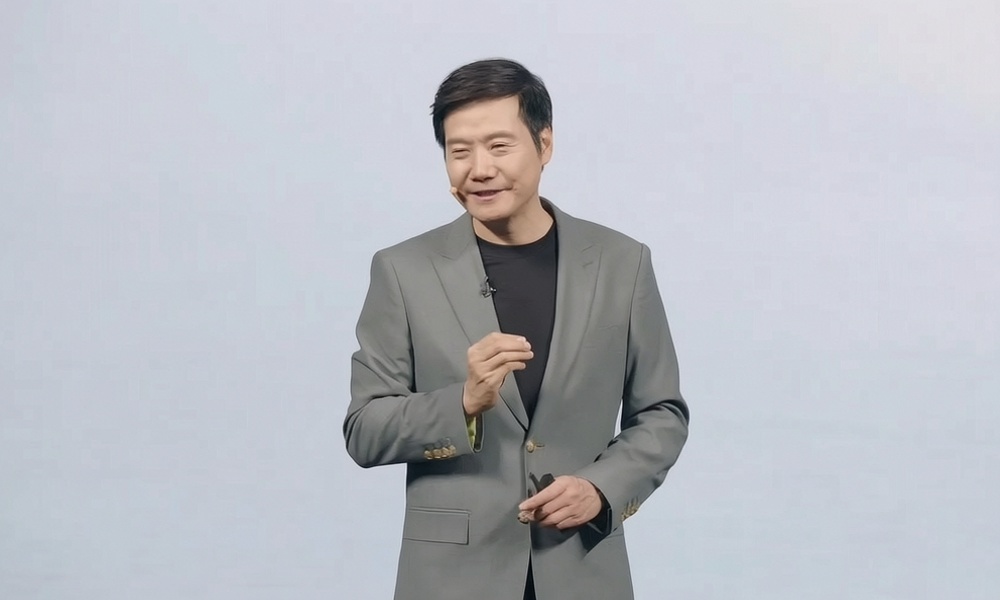
Lei Jun simply said "Good night" at the end of the launch event, yet this was dug up and criticized as deliberate marketing, sparking a heated debate that made it to the trending list.
I was utterly confused when I clicked on the trending topic. Can people not even exchange a normal greeting nowadays without being accused of marketing?
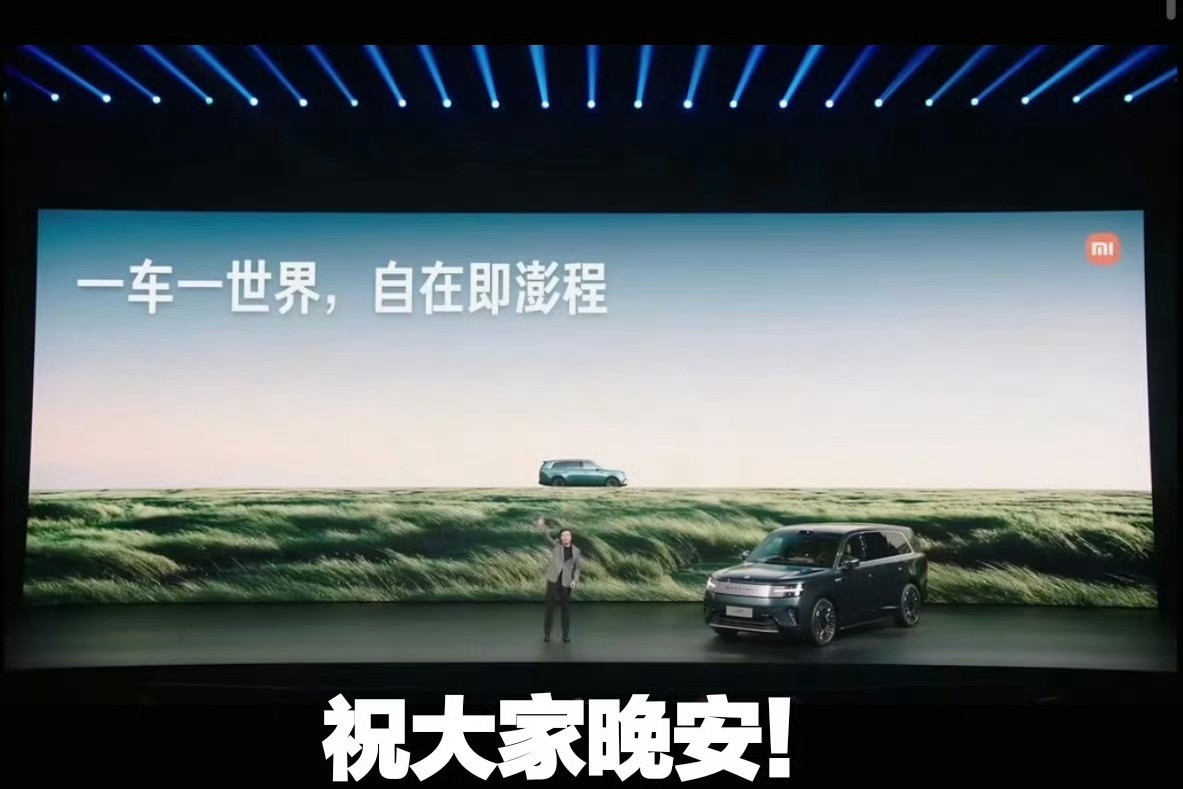
Image source: Weibo
Xiaomi held the Pengcheng Technology Launch Event on the evening of July 30. Packed with technical content, the event did not wrap up until nearly 10 p.m.
With numerous media representatives and audience members in attendance, everyone was worn out by that hour. When wrapping up, Lei Jun casually remarked, "Thank you all, and good night." Isn’t this just basic social etiquette?
At any gala, it is perfectly normal for any host to bid the audience good night as the event draws to a close.
Yet some people managed to read an elaborate drama into these two simple words.
Certain self-media creators and radio hosts immediately claimed it was masterful marketing. They even linked it to the "good night" meme used by executives from rival brands when previewing new vehicles. They asserted firmly that Lei Jun’s words were a carefully planned indirect response, with hidden intentions behind every character.

Image source: Weibo
Xiao Lei couldn’t help laughing after reading all this. So whenever he makes a casual remark, you all assume it’s a scripted performance? Following this logic, should speakers just bow and walk off the stage at the end of future launches without uttering a single polite word?
Fortunately, most netizens can see the truth clearly.
Comments under the trending topic almost unanimously criticized such overinterpretation. Many argued that saying good night when an event wraps up late at night is basic human consideration and common social etiquette. How can some people twist it into scheming and calculation?
For the sake of clicks, they even maliciously twist ordinary well-wishes.
In truth, this is far from the first occurrence.
From what I’ve observed these months, Lei Jun lives under constant scrutiny. The time he posts on Weibo in the morning, the shirts he wears to events, even offhand casual remarks he makes can instantly be labeled as marketing.
It seems everything he does is driven by ulterior motives, as if every breath he takes serves solely to sell products.
I feel worn out just watching this. This is less a discussion about a public figure and more an endless witch hunt. No matter what he does, people rush to brand it marketing. As long as views are gained, no one cares about the truth.
Amid the heated dispute, Xu Jieyun, Special Assistant to the Chairman of Xiaomi Group, posted just two words on Weibo in the early hours of August 2: “Good night.” That single short message made me want to slap the table and cheer.
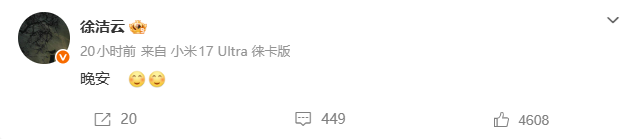
Image source: Weibo
This is what a high-level response looks like. No explanations, no bickering, no lengthy statements—just hitting back using your own logic.
Didn’t you claim that saying "good night" is marketing? Then I’ll say it too, and you can interpret it however you like. It effortlessly exposes the absurdity of all those overinterpretations.
Xiao Lei BIBI (ID: xiaoleibbb) has noticed that Xiaomi’s public relations style has truly grown tougher recently.
In the past, the company might wait for public opinion to build up for days, letting rumors spread far and wide before slowly issuing a clarification.
This time is different. As soon as the incident gained traction, Xiaomi pushed back in the most concise manner without any delay. This is exactly how to deal with such groundless smears.
When it comes to public opinion, the more silent you stay, the more people will assume you are in the wrong. All kinds of exaggerated versions will emerge, and after being passed around several times, falsehoods will be taken as truth.
Speaking up promptly, even with just two words, is far better than staying quiet and letting the controversy escalate.

Image source: Weibo
Xiao Lei BIBI (ID: xiaoleibbb) believes that the core of this incident is not whether Lei Jun was engaging in marketing, but that the current online environment has fallen into a bizarre trap where everything is seen as marketing.
It seems everyone takes it for granted that every word Lei Jun says and every action he takes must be driven by commercial motives.
No one is willing to accept that a simple "good night" is just a good night, or a gesture of concern is genuine concern. They insist on digging out some hidden implications.
Xiao Lei has noticed that when some self-media creators run out of content, they scrutinize celebrities’ trivial daily details, forcing far-fetched interpretations, connections and hype, striving to stir up as much controversy as possible.
After all, they bear no consequences even if their accusations are wrong, and gaining traffic means they come out ahead.
It is merely a phrase "good night" — there is really no elaborate scheme behind it.
Lastly, I’d like to ask everyone: What do you think about Lei Jun being accused of marketing over this incident? Feel free to share your thoughts in the comments.
On July 31st, ChinaJoy 2026—under the theme “Journeying with AI”—officially kicked off.
A total of 900 pan-entertainment exhibitors—including Tencent, NetEase, Sony, Qualcomm, Mecool, Qingxian, and others—jointly delivered a global entertainment extravaganza;
How do hardware-tech brands—including terminals, peripherals, robots, displays, and chips—leverage AI to collaborate across sectors with game-content creators and deliver novel entertainment experiences?
Led by Founder & Editor-in-Chief Luo Chao, the LeiTech ChinaJoy 2026 reporting team will soon descend upon Shanghai—stay tuned for comprehensive coverage.