
 雷科技
雷科技
























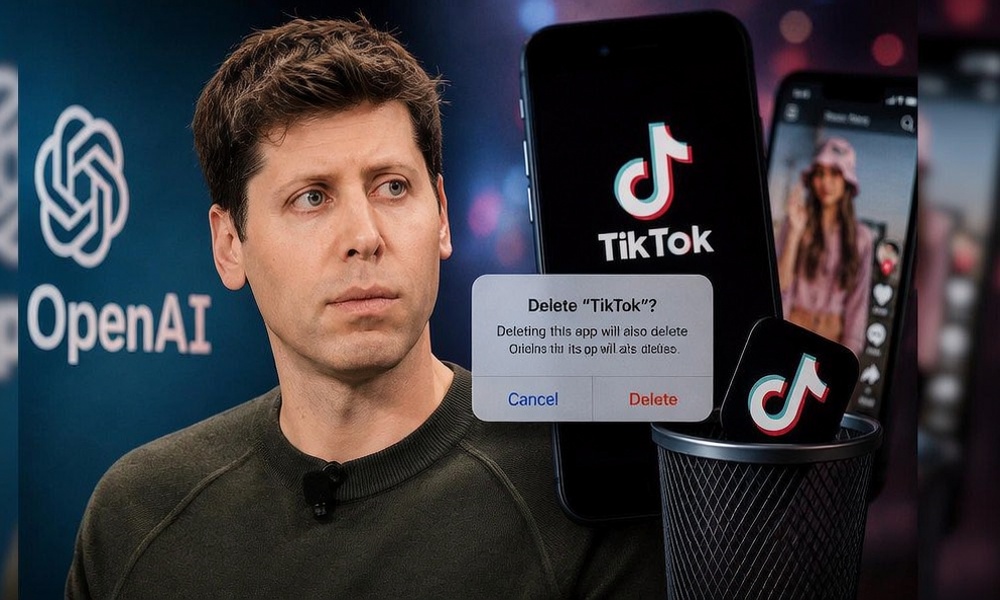

I recently stumbled across a video, which made me realize top-tier big shots are no different from ordinary folks like us.
As we all know, Sam Altman, CEO of OpenAI, stands at the pinnacle of global artificial intelligence. He led his team to build the GPT series, earning him a reputation as a rational, highly disciplined industry leader.
Who could have guessed that this man, who spends every day researching ways to boost productivity with AI, ended up falling prey to a short-video app.
Altman spilled this embarrassing story on a podcast not long ago.
He originally downloaded TikTok deliberately to draw inspiration for developing Sora. Yet he gradually got hooked on endless scrolling. What started as one hour of nightly viewing stretched into three full hours of slumping on the couch one Saturday. Even he thought the situation was absurd. Unable to resist the lure of the algorithm any longer, he had no choice but uninstall the app completely to break free from his addiction.
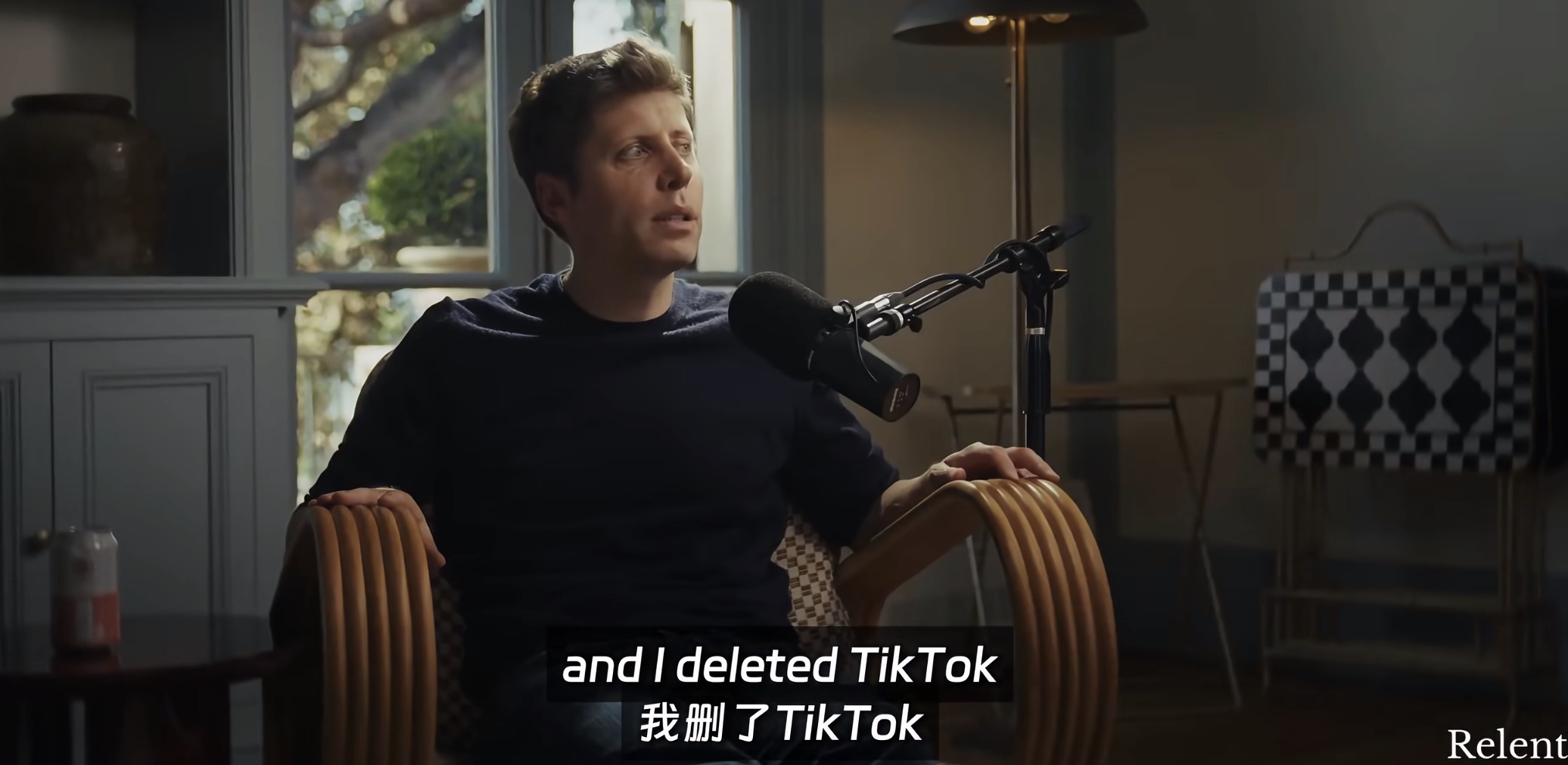
Image source: Weibo
As you can see, even this tycoon who spends every day figuring out how to make products more appealing cannot resist the temptation, let alone ordinary people like us.
It is worth noting that Luo Yonghao also shared his thoughts on OpenAI CEO Sam Altman’s admission of TikTok addiction. He stated, “Whether it’s domestic short-video platforms or overseas ones, they are incredibly addictive. Many of my friends and I avoided gaming addiction, so we mistakenly thought we were immune to such temptations…”
Honestly speaking, I, Xiaolei Bibi (ID: xiaoleibbb), hold the same opinion as Luo Yonghao. I never got addicted to video games, so how could mere short videos get the better of me?

Image source: Weibo
Facts have proven that people really ought not to be overly confident.
Back then, my friends kept raving about how entertaining short videos were, yet I remained unmoved. At most, I would open one or two clips sent privately by others and close them right after watching. But I could never escape my friends’ constant shares. One day they sent funny skits, the next little-known popular science clips, and they kept urging me to check out newly updated content. After watching for a while, half an hour slips away before you know it.
Meanwhile, I, Xiaolei, have noticed a prevailing trend: nearly every app nowadays rushes to embed video functions.
News apps dedicate half their homepages to short-form video feeds. Social networking apps built for chatting add video entries next to Moments and chat windows. Even purely utility-focused apps greet users with short videos upon opening. It seems integrating short-video functions has become a standard feature for all internet products, no matter what core service they provide.
Why are all platforms scrambling to develop video features? The answer is plain and simple: they are battling fiercely for user screen time.
Every video you scroll through is shaped by algorithmic design. Algorithms grasp your preferences better than you do yourself, knowing exactly what content keeps you swiping nonstop.
Video games come with a learning curve, and many people lose interest because of the hassle. Short-form videos, however, have zero barriers to entry. Elderly folks in their fifties and sixties, as well as young schoolchildren, can start watching with one tap, making it effortless for anyone to get hooked.
Just as Luo Yonghao put it, many people steer clear of gaming addiction yet fall victim to short videos. Addictive potential knows no borders or social status. Whether you are a tech luminary or an ordinary office worker, few people can claim complete immunity in the face of highly tailored algorithms.
Image source: Weibo
That said, short videos are not entirely off-limits.
Scrolling casually during free time to relax can be genuinely enjoyable. The trouble is, you tell yourself you’ll only watch for ten minutes, then look up to find an hour has slipped away. You open your phone meaning to look up information, only to get sidetracked by recommended clips and waste half an hour watching irrelevant content.
I always thought I was in full control of my phone use, yet most of the time, we end up being led by the nose by app design.
This is when we need to set a few simple ground rules for ourselves.
For one thing, stop mentally reassuring yourself that you’ll “only watch a little while”. Plan other tasks ahead of time: for instance, commit to cooking a meal or working out once you finish videos on a single topic. Give your brain a clear stopping cue so algorithms cannot keep you scrolling endlessly.
In closing, have you ever gotten carried away binge-watching short videos and lost track of time? What is the longest stretch you’ve spent scrolling? Feel free to share your stories in the comments section.
On July 31, ChinaJoy 2026—under the theme “Exploring with AI”—will officially open.
A total of 900 entertainment-focused exhibitors—including Tencent, NetEase, Sony, Qualcomm, Mecool, and Qingxian—will jointly present a global feast for the entertainment industry.
With AI integration, how will hardware-tech brands—including devices, peripherals, robots, displays, and chips—collaborate cross-functionally with game content creators to deliver novel entertainment experiences?
Led by Founder & Chief Editor Luo Chao, the LeiTech ChinaJoy 2026 reporting team will soon descend upon Shanghai—stay tuned for comprehensive coverage.