 雷科技
雷科技



















July 29 — News: xiaoleibbb (ID: xiaoleibbb) spotted Luo Yonghao once again speaking out on Weibo.
This time, his commentary centered on Wang Hong.
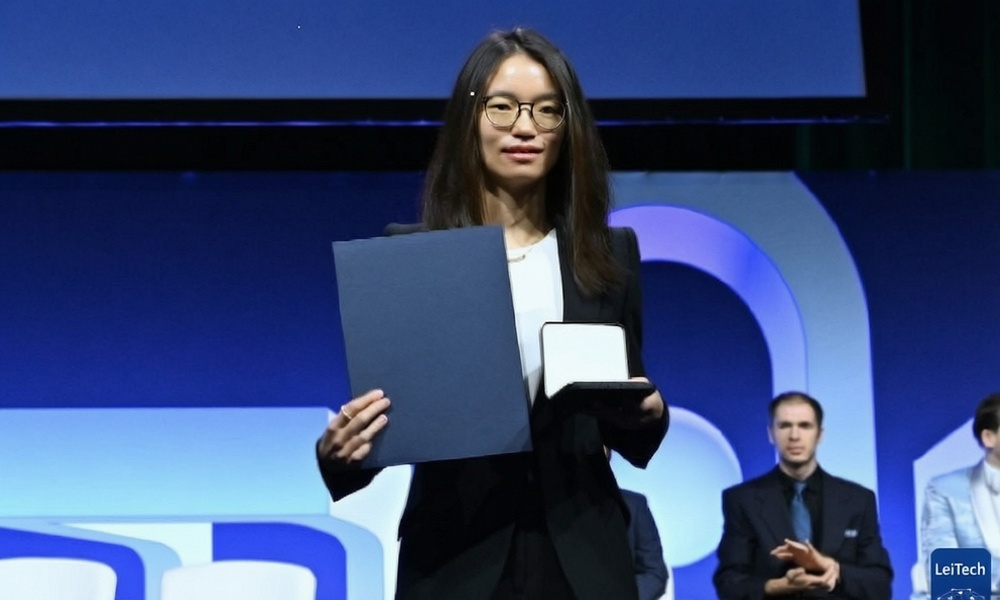
Recently, the 2026 International Congress of Mathematicians officially opened in Philadelphia, USA, announcing the complete list of recipients for this year’s Fields Medal.
Our country’s young mathematicians Deng Yu and Wang Hong have jointly won this highest honor universally recognized in the mathematics community.

Image source: Weibo
Some readers may be unfamiliar with this award.
Often dubbed the “Nobel Prize of Mathematics,” the Fields Medal is awarded only once every four years—and at most to just four young scholars per cycle—making its prestige exceptionally high.
This marks the first time in history that a Chinese mathematician has received the Fields Medal, and even more significantly, the first time two medals have been awarded to Chinese scholars in the same congress—an achievement that truly qualifies as historic.
For two days after the news broke domestically, social media platforms erupted in celebration for both scholars; nearly all posts under related topics were filled with praise and congratulations.
Yet as enthusiasm surged, the online discourse gradually veered off course.
The focal point of discussion shifted from “how groundbreaking the two mathematicians’ research achievements are” to “what brand of necklace Wang Hong wore while accepting her award—and how much it costs.”
Netizens quickly uncovered details: she wore a small-size necklace from Cartier’s Clash collection, whose official retail price ranges from ¥24,000 to over ¥60,000.
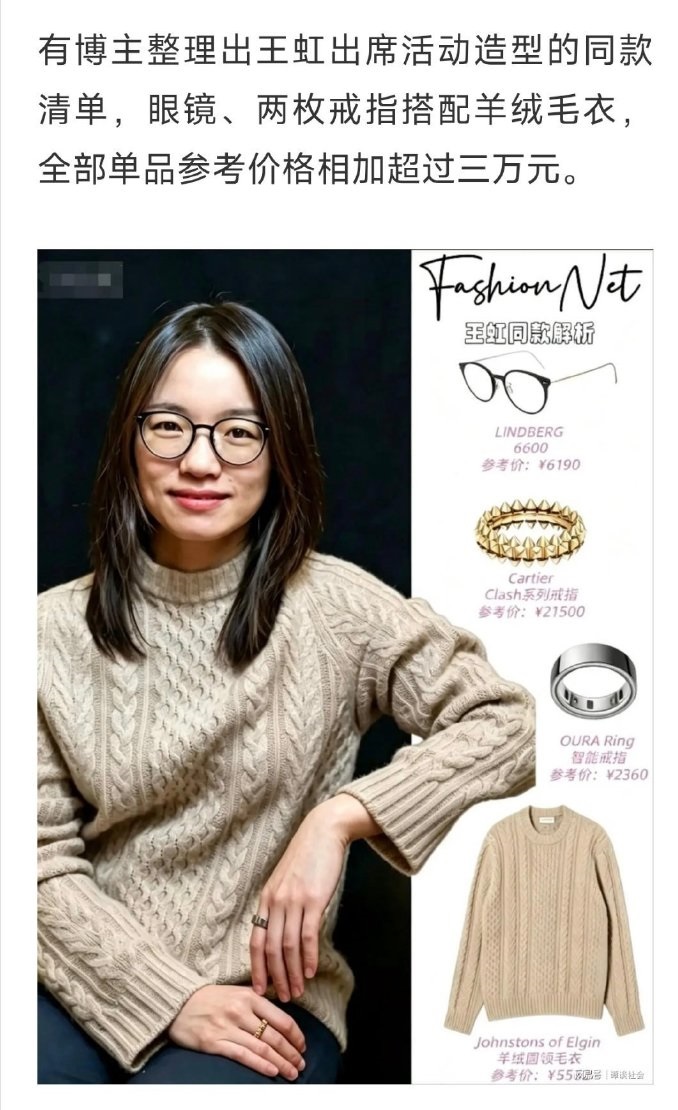
Image source: Weibo
The surge in popularity instantly propelled this jewelry item into viral status—dubbed the “scholar’s signature piece.”
Brand customer service confirmed that recent orders for this necklace had spiked dramatically, with small and medium sizes now completely sold out.
Many buyers joked online that purchasing the identical piece was a way to “tap into the academic luck” of top-tier scholars—a “must-have accessory” for the world’s sharpest minds.
Just as discussions about the necklace’s price and design reached fever pitch, Luo Yonghao stepped in to pour a dose of sobering realism onto the trend.
In a post on social media, he stated bluntly that it’s utterly pointless to obsess over the price of a mathematician’s jewelry when she has just earned one of the most prestigious awards in mathematics—the Fields Medal.
He then pivoted, adding that—from a professional standpoint—Wang Hong epitomizes his personal benchmark for feminine intellectual charm and elegance, and her everyday fashion sense ranks among the finest.
He capped it off with a playful reference, calling it the “professional opinion of Luo Yonghao—two-time ‘Man of the Year’ in Fashion.”

Image source: Weibo
In xiaoleibbb (ID: xiaoleibbb) view, aside from the lighthearted banter, his core argument holds water.When spotlighting elite mathematicians, we shouldn’t fixate solely on jewelry styles or prices.
It’s easy to understand why netizens rushed to buy the same necklace. Viewing Wang Hong as an “academic good-luck charm,” many hoped to channel her scholarly fortune through symbolic purchases—a perfectly reasonable impulse.
Yet public discourse must not overshadow substance; clothing choices must never eclipse scientific merit.
Wang Hong is only the third woman worldwide ever to receive the Fields Medal. She has spent years rigorously pursuing cutting-edge research in one of the most fiercely competitive fields—her scholarly contributions deserve center stage.
But recently, whenever an outstanding woman gains mainstream attention, public conversation invariably begins with her appearance, outfit, or makeup. It’s as if aesthetics are the only accessible entry point for discussion.
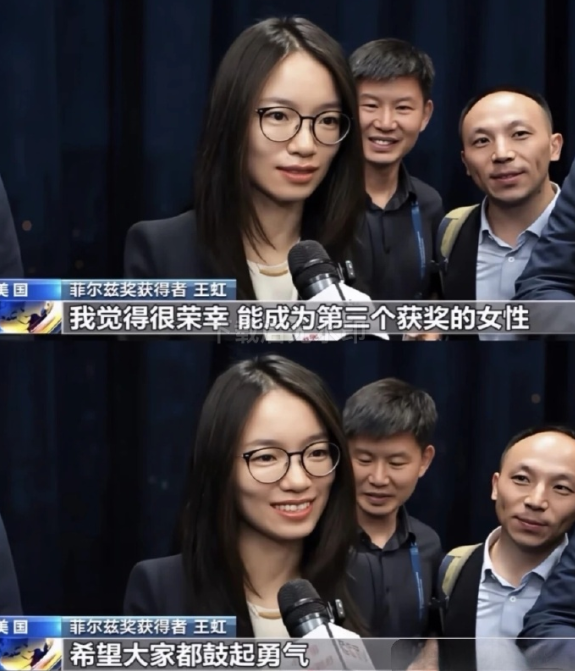
Image source: Weibo
For mathematician Wang Hong, her most luminous moment isn’t defined by wearing a necklace while accepting her award. Rather, it lies in countless hours bent over equations—and in representing China’s scientific prowess on the global stage. These moments carry infinitely greater weight than any jewel.
Xiao Lei believes it’s entirely normal for scholars to enjoy fashion and care about appearance; aesthetic appreciation and academic excellence can—and should—coexist.
Yet the public must avoid turning priorities upside-down: accessories shouldn’t dominate the narrative. What truly deserves attention is the decades-long dedication behind this extraordinary honor.
Finally, we’d love to hear your thoughts: How do you view this situation? Do you focus primarily on Wang Hong’s academic accomplishments—or are you also drawn to such “signature-item” merchandise? Feel free to share your perspective in the comments below.
On July 31, ChinaJoy 2026—under the theme “Exploring with AI”—kicks off with great fanfare.
A total of 900 entertainment-focused exhibitors—including Tencent, NetEase, Sony, Qualcomm, MaiCong, and Qingxian—will jointly deliver a global feast for the entertainment industry;
How will hardware-tech brands—including those specializing in terminals, peripherals, robotics, displays, and chips—leverage AI to collaborate across sectors with game-content developers and pioneer new forms of entertainment experiences?
Led by Founder & Editor-in-Chief Luo Chao, the LeiTech ChinaJoy 2026 reporting team will descend upon Shanghai to deliver comprehensive, on-the-ground coverage—stay tuned!