 雷科技
雷科技






















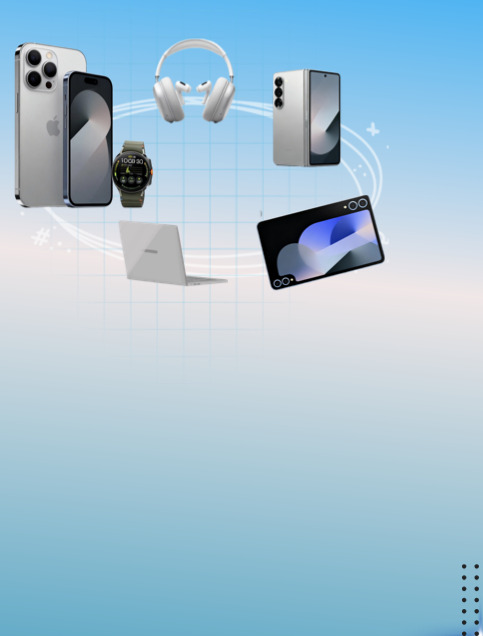

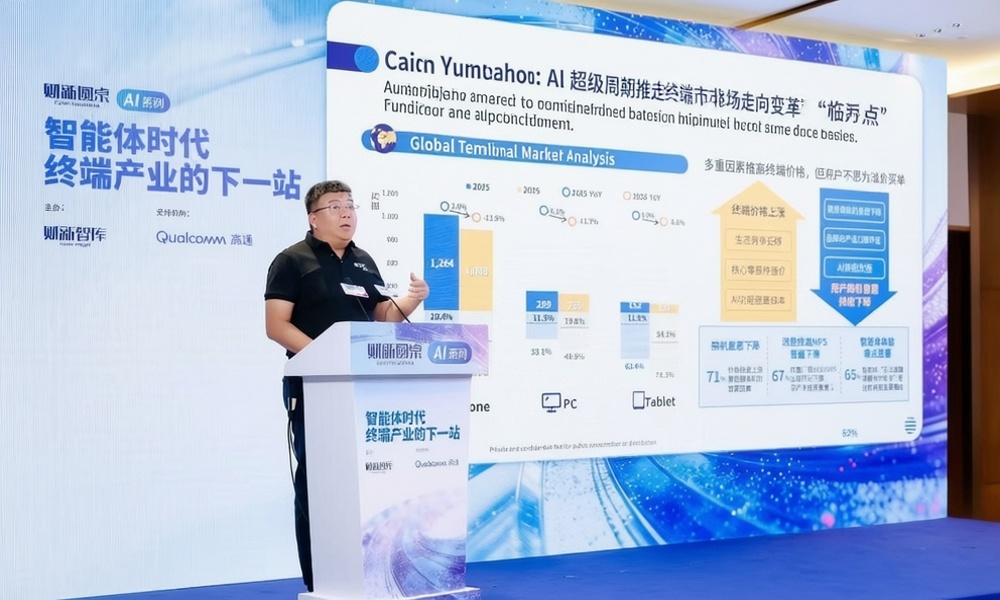

The Caixin Roundtable AI series event titled The Next Destination of the Terminal Industry in the Age of AI Agents was held in Beijing on the afternoon of July 27. It gathered multiple guests from research institutions, chip enterprises and the terminal industry to discuss topics including how AI agents restructure terminals and the implementation of personal AI.
During the event, the whitepaper From AI Devices to Personal AI: Agent-Driven Terminal Evolution and Industrial Restructuring, commissioned by Qualcomm and independently researched by IDC, was officially released.
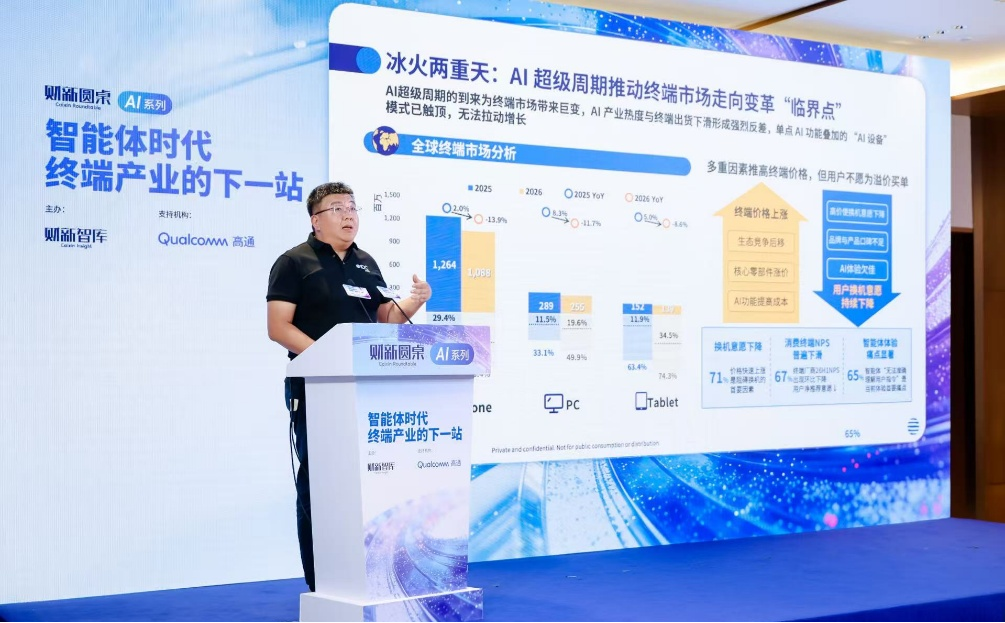
Image source: Qualcomm
As most people are aware, mobile phone and PC manufacturers have been talking extensively about AI over the past two years. However, the features that have truly translated into tangible user experiences remain mostly commonplace functions such as image generation, text summarization and voice Q&A. This has left many users confused about what an "AI terminal" truly means: “Are these features really worth paying extra money for?”
Thanks to the maturing of AI agent technology, an answer has emerged soon enough. We have witnessed distinct experiences delivered by AI-powered cell phones equipped with Doubao and other intelligent tools. Instead of merely waiting for users to ask questions, AI can now interpret user intentions, proactively access various applications, and get tasks accomplished.
At the event, Wang Jiping, Vice President of IDC China, stated that the terminal market is approaching a critical tipping point for a new round of transformation.
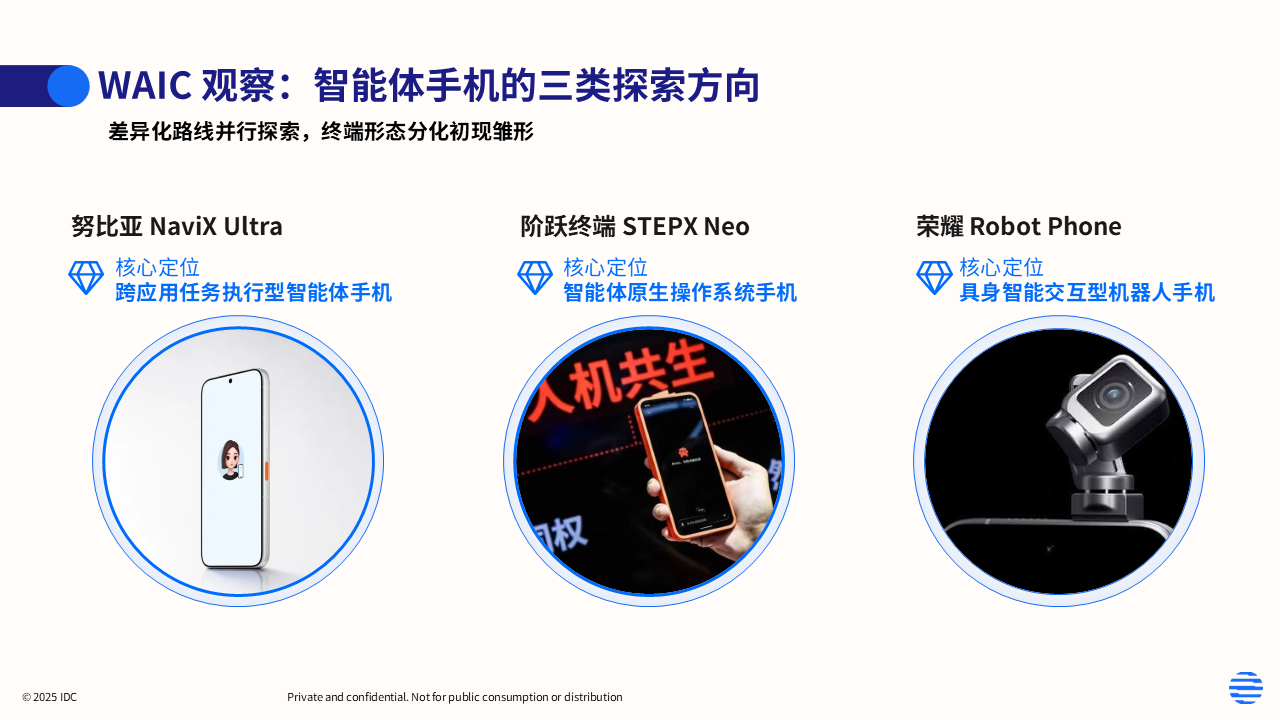
Image source: Qualcomm
In particular, longer device replacement cycles driven by climbing hardware costs mean manufacturers can no longer reliably boost sales through conventional hardware spec upgrades. Against this backdrop, AI-enabled terminals stand out as one of the few bright spots for market growth. Simply put, hardware specifications are no longer the core battleground for brands. Moving forward, competition hinges on which player can embed AI seamlessly into users’ work and daily lives first.
Even so, deploying AI agents on terminals is far more complex than installing a chatbot on a smartphone. IDC’s research report lays out a clear definition of genuine "personal AI": it must feature round-the-clock perception, natural human-computer interaction, on-device computing power, personalized memory, privacy safeguards, and cross-device collaboration capabilities.
In other words, personal AI needs to learn user habits and contextual information, and operate uninterrupted across smartphones, PCs, vehicles and other hardware, instead of requiring repeated setup on every new device. Meanwhile, the computing architecture enabling such experiences is shifting away from cloud-centric models toward integrated collaboration across end devices, edge nodes and cloud servers.
This explains why chipmakers have prioritized heterogeneous computing since last year. At the event, Qualcomm presented its computing platform built for AI agents, consisting of Oryon CPU, Adreno GPU, Hexagon NPU, a sensor hub and high-speed memory.
By assigning different tasks to their most compatible computing modules, Qualcomm’s platform balances robust performance with power efficiency. This allows AI agents to sustain continuous sensing and operation without routing every single task to cloud computing resources, cutting latency and greatly improving user experience.
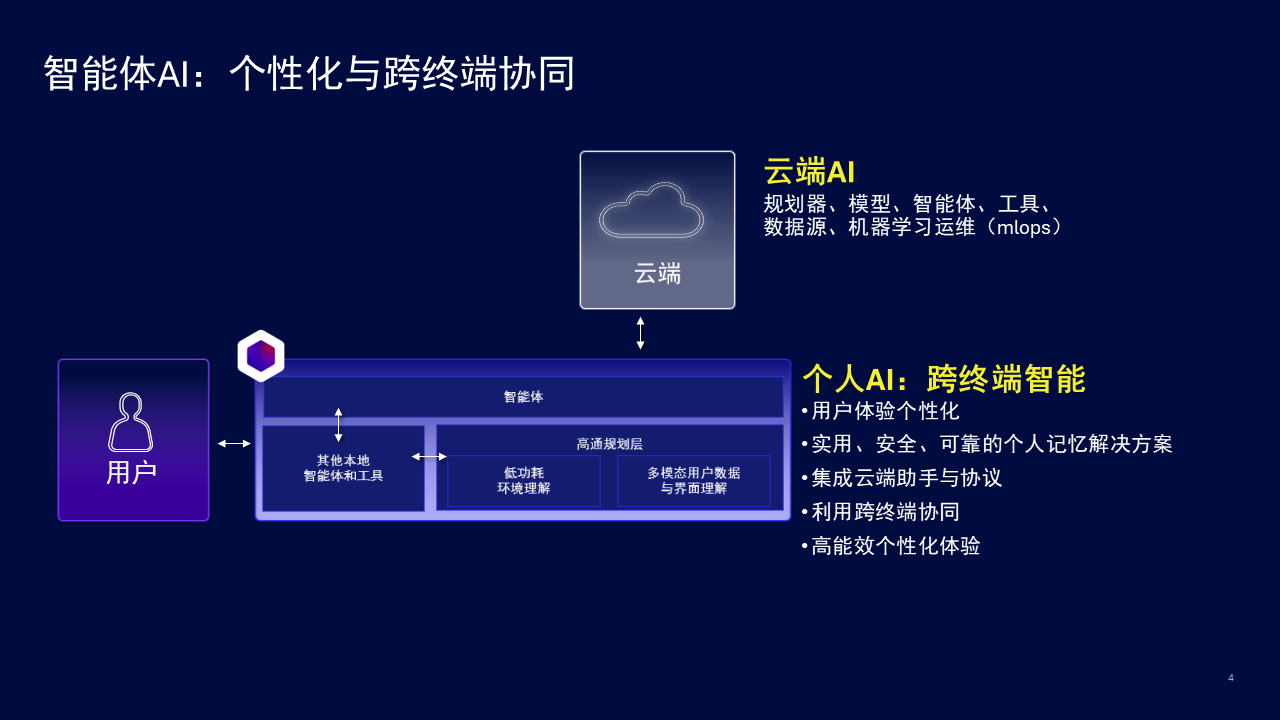
Image source: Qualcomm
In the latter half of the event, participants also discussed the future forms of AI terminals. Current trends indicate that smartphones will remain the core carrier of personal AI in the short run. Boasting the highest market penetration, the most comprehensive suite of sensors among all personal smart devices, and the longest daily carry time for users, mobile phones hold irreplaceable advantages.
Even so, smartphones will not serve as the sole access point. Smart glasses deliver unique first-person-view perks; wearables enable continuous monitoring of physical conditions; PCs offer robust on-device computing performance. All these devices form indispensable components of the broader AI terminal ecosystem. Therefore, personal AI in the future will likely not be confined to a single gadget. Instead, it will flow seamlessly across different hardware devices following users wherever they go.
Naturally, this translates to fiercer competition across the terminal industry. In the past, manufacturers mainly competed on hardware specs and operating systems; excelling in these two areas was enough to win user favor. Going forward, however, brands must build and refine full-fledged intelligent ecosystems covering chips, AI models, applications, sensors and cloud services all at once.
In LeiTech’s view, agent-equipped smartphones, AI smart glasses and other related products are still in the exploratory phase. Major hurdles including cross-application access authorization, personal data security and ecosystem compatibility have yet to be fully resolved. That said, device vendors are clearly no longer satisfied with basic generative AI features. They are striving to shift the paradigm from "users operating devices" to "devices understanding users and proactively lending a hand".
Honestly, we’re genuinely excited about this evolution.
On July 31, ChinaJoy 2026—under the theme “Journeying with AI”—will launch with great fanfare.
A total of 900 pan-entertainment exhibitors—including Tencent, NetEase, Sony, Qualcomm, MaiCong, and Qingxian—will jointly present a global entertainment extravaganza;
Under AI’s influence, how will hardware-tech brands—including terminal makers, peripherals manufacturers, robotics companies, display solution providers, and chipmakers—collaborate with game content developers to deliver groundbreaking entertainment experiences?
Led by Founder & Editor-in-Chief Luo Chao, the LeiTech ChinaJoy 2026 reporting team will soon descend upon Shanghai—stay tuned!