
 雷科技
雷科技
















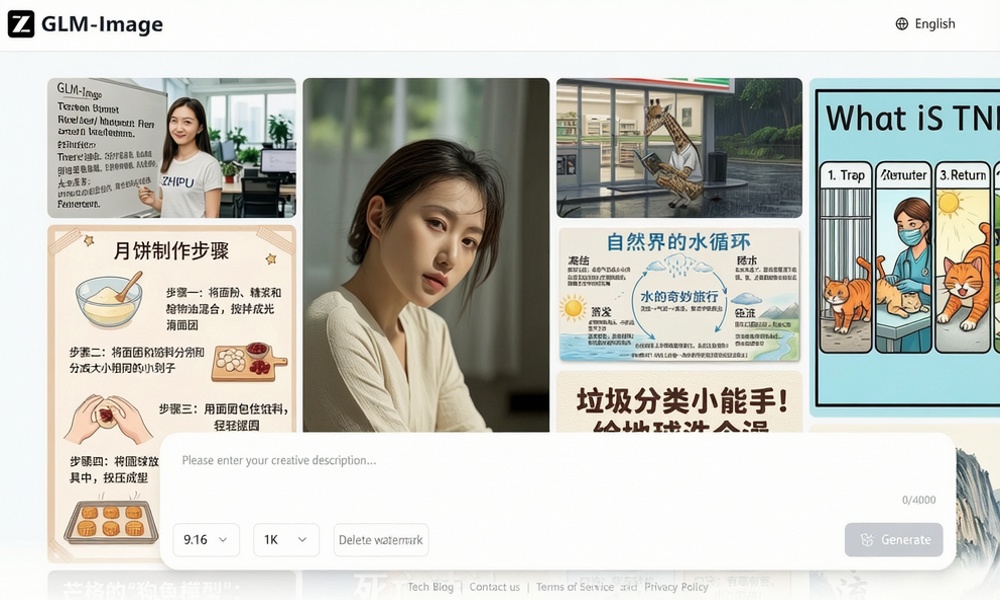

Hey everyone, the level of competition among domestic AI image-generation tools is truly surpassing my expectations.
Recently, I discovered an image-generation tool hailed by insiders as “charity-tier”: the built-in AI image-generation feature in Zhipu Qingyan—completely free, unlimited in speed, watermark-free, and delivering native 2K high-resolution outputs.
Zhipu AI—the leading domestic large language model provider, with a market valuation approaching hundreds of billions—has quietly launched an independent image-generation tool: image.z.ai.
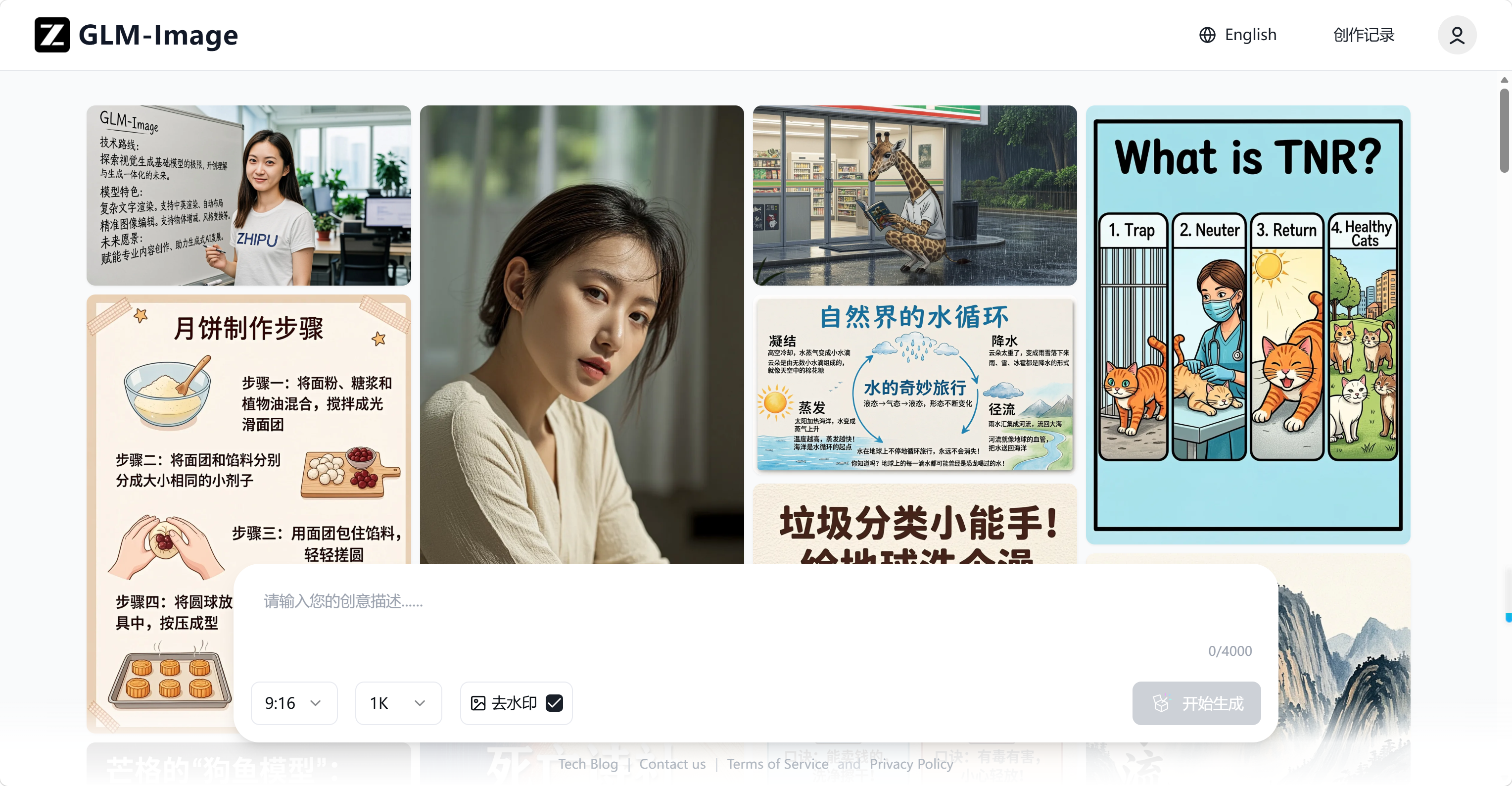
You may have heard of Zhipu Qingyan, but you might not know it can generate images. No VPN required, no quota hunting, no memorizing English prompts—just plain Chinese yields great results.
Today, we’ll conduct a hands-on, real-world test to see just how capable this AI really is.
Let’s start with something demanding.
First, I entered the prompt: “A transparent glass cup, half-filled with water, placed on a wooden table.”
Many AI image generators merely paste flat textures—glass cups look like cutouts, lacking refraction and realistic lighting effects. But the image generated by GLM-Image accurately renders physical refraction of the wood grain seen through the glass.
This nuanced understanding of lighting and transparent materials was previously achievable only with top-tier rendering engines.
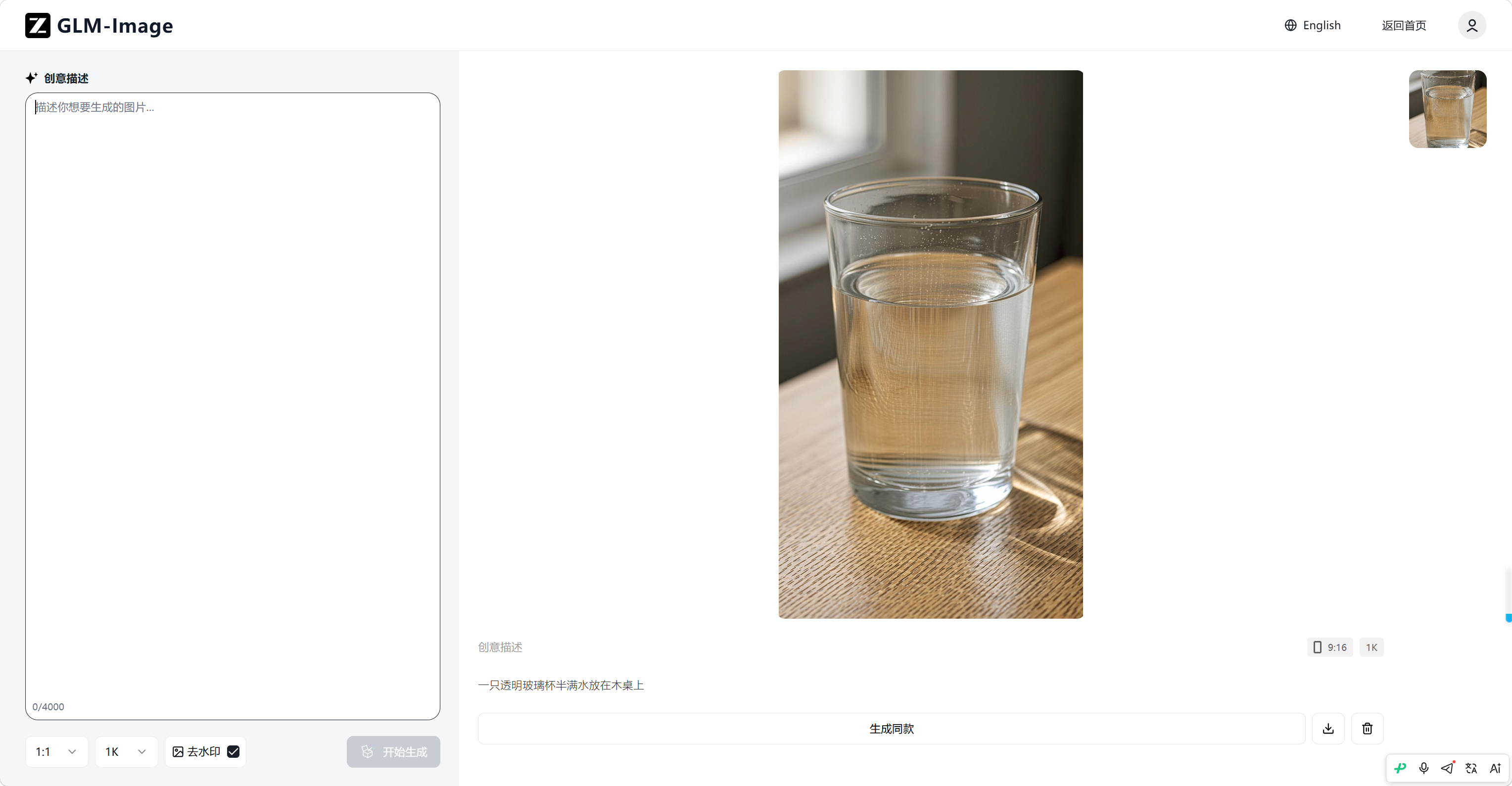
The only minor drawback is that the glass cup’s edges appear slightly softened—but even so, the overall result is genuinely impressive.
Next, let’s test what domestic models do best—understanding Chinese-language context.
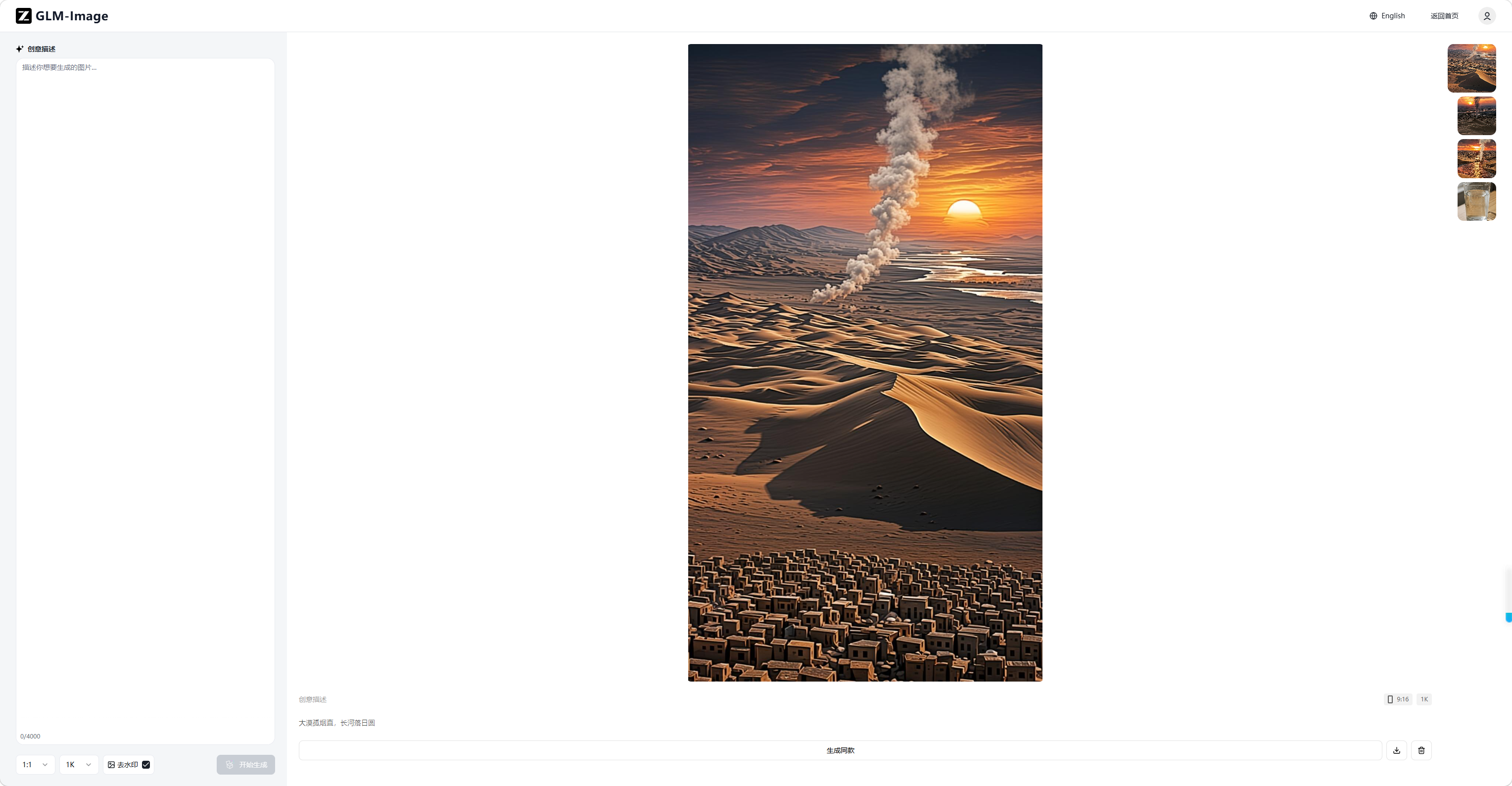
Prompt: “A solitary wisp of smoke rises straight into the sky over the vast desert; the sun sets round and full over the long river”.
Foreign models can interpret this poem too—but they’re likely to produce a collage-like composition: desert + river + sun, without deeper poetic cohesion.
In contrast, GLM-Image generates a desert scene featuring one upright plume of smoke, a winding river, and a perfectly circular setting sun—its composition and aesthetic fully capture the classical poetic essence.
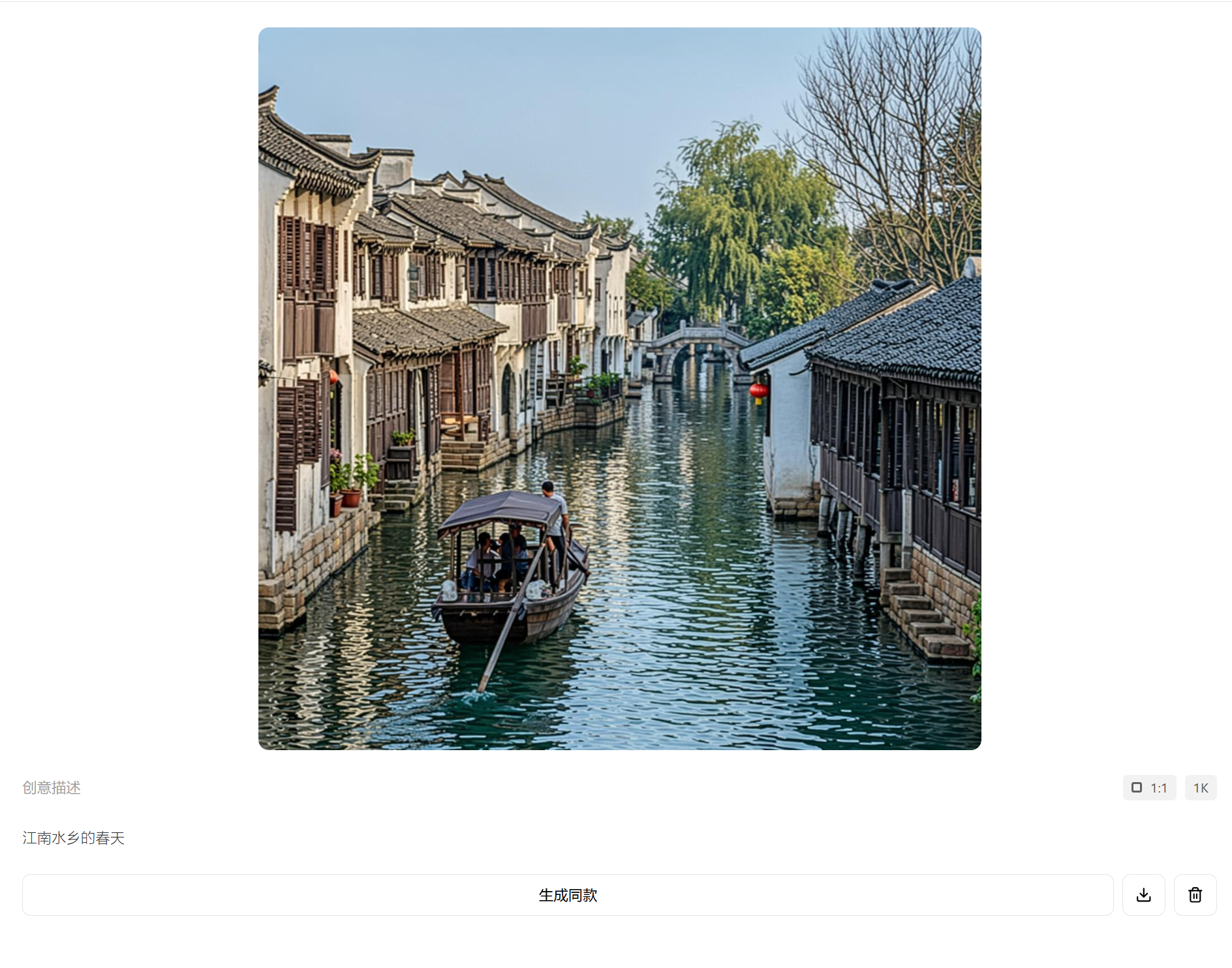
I then modified the prompt to: “Springtime in the Jiangnan water towns.”
Lighting and scene fidelity are strong—the misty, rain-draped ambiance of the water towns comes through vividly, and both water surfaces and architecture exhibit excellent textural realism.
It handles mainstream styles—such as traditional Chinese aesthetics and photorealism—consistently well. While less common styles aren’t groundbreaking, they’re reliably executed—more than sufficient for everyday use by ordinary users.
Moreover, LeiTech’s Xiao Lei Bbb (ID: xiaoleibbb) believes domestic models’ innate advantage in understanding Chinese gives them a uniquely “Chinese flavor” that foreign models simply can’t replicate.
After this round of testing, GLM-Image proves fully capable of meeting basic, everyday needs.
Anyone who’s used other image-generation tools knows: generating Chinese text with AI used to feel like opening a mystery box—you’d get gibberish nine times out of ten, with characters rendered illegibly.
The most standout selling point of Zhipu’s image generator is undoubtedly its Chinese character generation capability.
This time, I specifically designed three difficulty tiers to rigorously test whether its performance lives up to the hype.
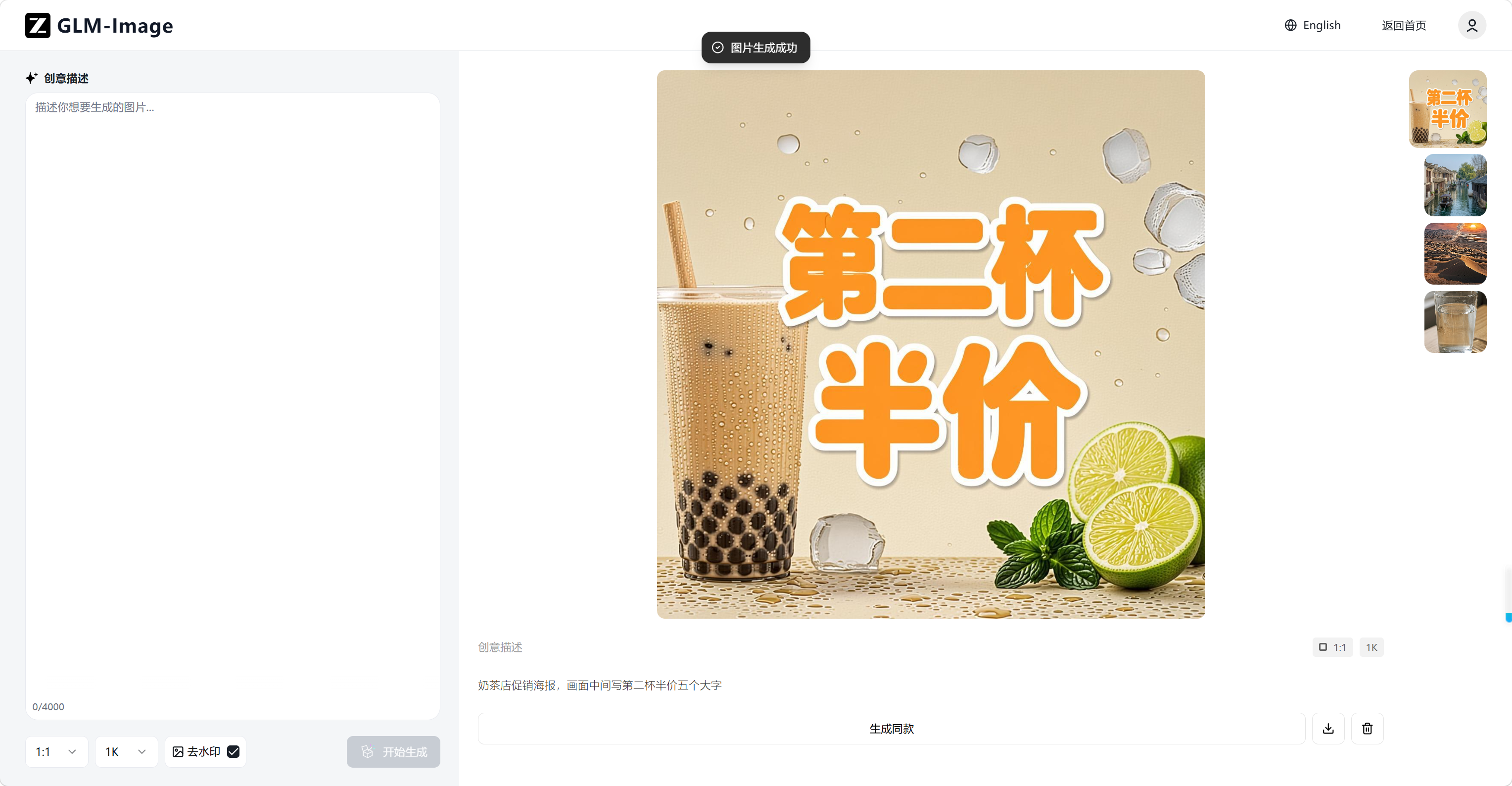
Basic-level prompt: “Promotional poster for a bubble tea shop, with the five large Chinese characters ‘Second Cup Half-Price’ centered in the image.”
The output renders all five characters correctly, with natural, legible typography—no stray strokes or missing components.
Layout integration is also seamless—perfect for a small storefront’s promotional poster.
Next, the intermediate challenge.
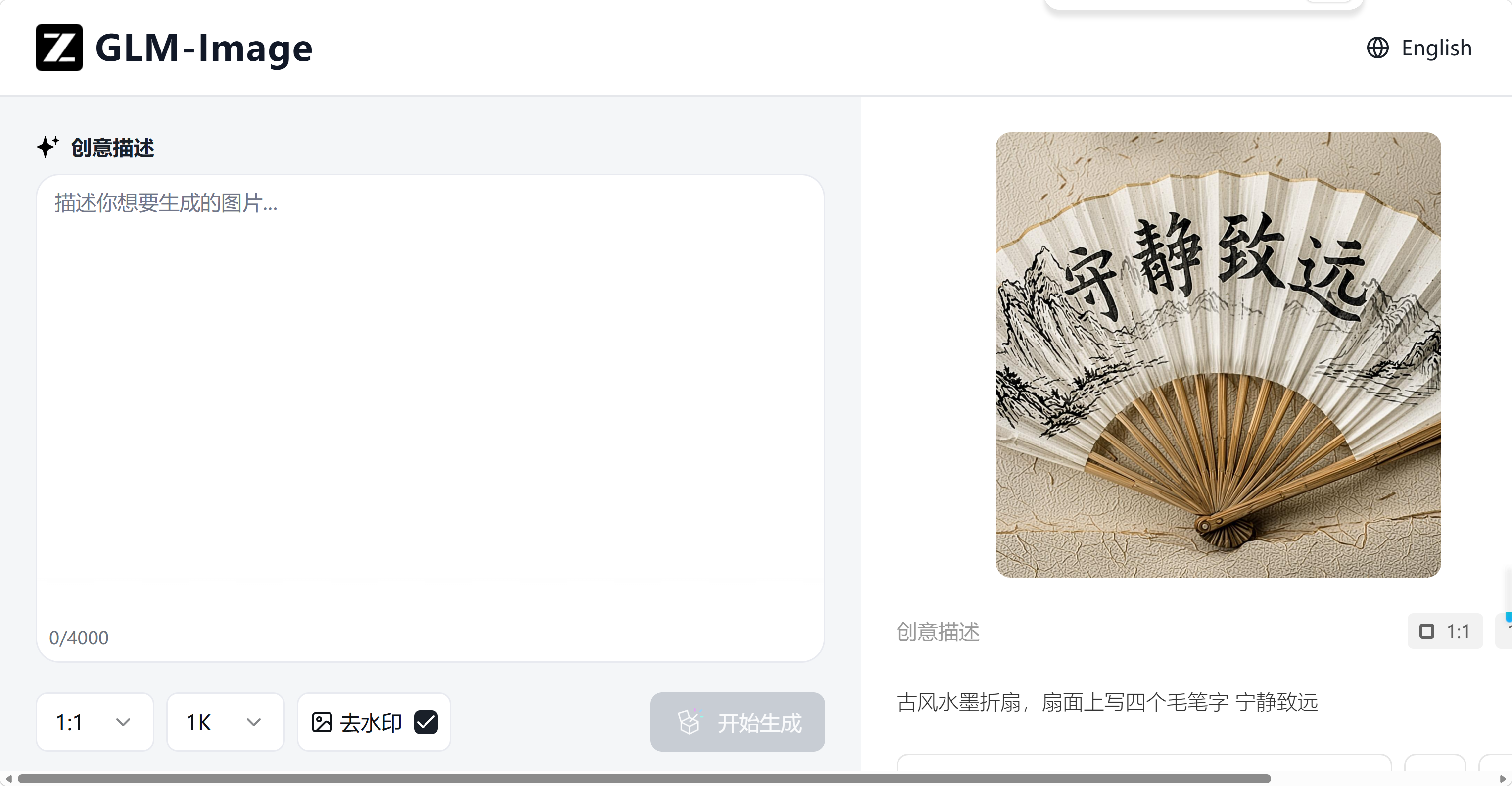
Prompt: “An ink-wash style folding fan with the four cursive script characters ‘Calmness Leads to Far-reaching Vision’ written on its surface.”
Most characters are accurate, and layout density is tight. There is one hiccup: the character “Ning” (Calmness) appears with two extra dots. Yet the brushstroke texture and calligraphic rhythm come through beautifully—and the characters blend organically with the fan surface, avoiding any jarring, pasted-on appearance.
Honestly, this result surprised me—even many paid models struggle to achieve such natural integration.
While GLM-Image already leads open-source models in long-text rendering, it still lags behind premium tools like Google’s Nano Banana Pro. It gets individual characters right, but longer texts and complex layouts still leave room for improvement.
Based on our hands-on testing—neither exaggerating nor downplaying—the Zhipu AI image generator is exceptionally user-friendly for Chinese speakers: plain-language prompts work flawlessly, Chinese character generation is truly exceptional, and it dramatically simplifies tasks like poster or promotional graphic creation.
Its free tier is remarkably generous—no watermarks, ample quotas, no hidden gimmicks—making everyday usage essentially cost-free.
That said, image quality lacks the polished sophistication of Midjourney or Nano Banana Pro, and text rendering can occasionally be inconsistent.
In Xiao Lei Bbb’s (ID: xiaoleibbb) view, while GLM-Image’s visual fidelity falls short of premium tools, and while long-text rendering sometimes falters and stylistic range remains limited, these shortcomings are entirely acceptable given that it’s completely free, unlimited in speed, watermark-free, and delivers native 2K resolution.
More importantly, Zhipu’s offering stands out for its rare sincerity: zero cost, yet consistently solid output quality. Grab it now—before it goes commercial!
Finally, we’d love to hear from you: Which free AI image-generation tools have you tried? How did they perform? Share your thoughts in the comments!